Hospital Hours: Monday-Friday: 8am-6pm | Saturday: 8am-4pm
(519) 896-0532

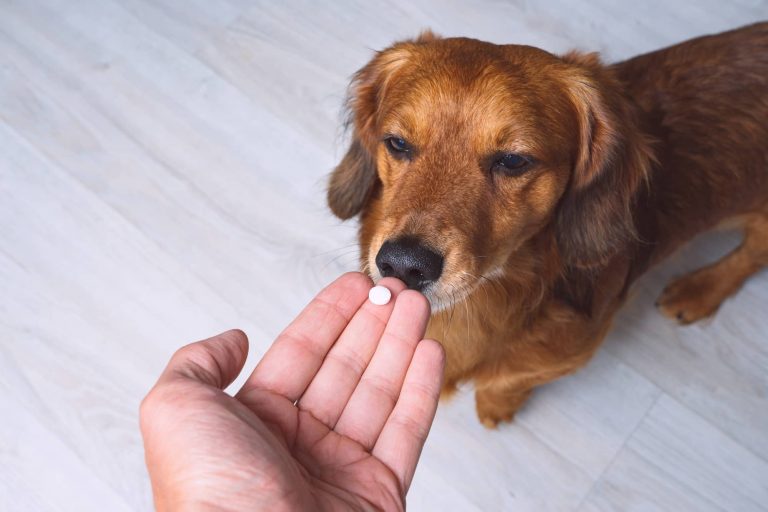
Tylosin is an antibiotic vets use mainly for dogs with long-running diarrhea that hasn't settled with a diet change and probiotics. It works quickly, and it works well while a dog is on it. In the dogs it helps most, the diarrhea comes back within a month of stopping.1
Key Takeaways
Tylosin is a macrolide antibiotic, the same family as erythromycin and azithromycin. In Canada you'll usually see it as Tylan, a soluble powder sold for livestock and poultry. Merck lists the dog and cat doses as extra-label, so a vet prescribing it for your dog is using their own judgment rather than a licensed label.6
It stops bacteria growing rather than killing them outright. Tylosin binds to the 50S subunit of the bacterial ribosome, the machinery that assembles proteins, and protein production stalls.6 At high concentrations it can kill bacteria. At normal doses it holds them in check and leaves the immune system to finish.6
Tylosin is not a broad-spectrum drug. It covers most gram-positive bacteria, both the ones that need oxygen and the ones that don't, plus mycoplasmas, and its potency varies a good deal between organisms.6
Diarrhea that keeps coming back. Vets call the pattern tylosin-responsive diarrhea, and it's the one use with real trial evidence behind it.
These dogs are usually young to middle-aged and medium, large or giant breed, with no single breed standing out. The diarrhea involves both the small and large intestine.1
One placebo-controlled trial has tested it. Twenty-seven dogs with recurring diarrhea got either tylosin at 25 mg/kg once daily for a week or an identical placebo. Seventeen of the 20 dogs on tylosin had normal stool at the end of the week (85%), against two of seven on placebo (29%).4
Vets also use tylosin long term in dogs with chronic inflammatory bowel disease.3 Merck's own position is that nobody knows how it works there, and its activity against mycoplasmas and spirochetes is the leading guess.3
A single bout of diarrhea is not a reason to use it. The 2024 ENOVAT guidelines recommend against antibiotics for mild and moderate acute diarrhea in dogs, with or without blood, on high-certainty evidence.2 That covers most cases of stress colitis and most cases of HGE.
There's no single number. Published doses span a wide range depending on what's being treated.
| Situation | Published dose | How often |
|---|---|---|
| General extra-label range, dogs and cats | 6 to 20 mg/kg by mouth | Every 8 to 24 hours6 |
| Chronic inflammatory bowel disease | 20 mg/kg by mouth | Every 8 to 12 hours3 |
| First course for recurring diarrhea | 25 mg/kg by mouth | Once daily for 7 days4 |
| Repeat course when it relapses | 5 mg/kg by mouth | Once daily for 7 days7 |
Don't dose your dog from this table. These are the figures published in the veterinary literature. Your vet picks from them based on your dog's weight, the cause of the diarrhea and the strength of the product they dispense, and a powder measured by eye is easy to get badly wrong.
A first course usually runs seven days. If the stool hasn't improved after three to five days, go back to your vet rather than extending it.
Because tylosin controls the diarrhea without fixing the reason for it.
The study that defined the condition followed 14 dogs who'd had diarrhea for more than a year and had relapsed at least twice before. On tylosin, every dog's stool was normal. Off it, 12 of the 14 were back to diarrhea within 30 days.1 Three days of prednisone didn't clear it, and a Lactobacillus rhamnosus GG probiotic didn't prevent a single relapse in the nine dogs given it.1
A relapse does take far less drug than the first course. When dogs who'd responded to 25 mg/kg relapsed, 14 of 15 came right again on doses as low as 5 mg/kg once daily for a week.7
This relapse pattern is why the guidance shifted. The 2026 ACVIM consensus statement on chronic inflammatory bowel disease in dogs makes a strong recommendation against starting antibiotics on spec, and it names tylosin. Its reasoning is that the response rarely lasts and the disruption to gut bacteria can go on for months.5
A dog going back for a third or fourth course has earned a diagnostic workup.
Tylosin is one of the better-tolerated antibiotics in dogs. In the placebo-controlled trial, no dog had a side effect the investigators put down to the drug.4
The problems that do come up are:
Allergic reactions are possible with any antibiotic and rare with this one. A dog with a known macrolide allergy shouldn't get tylosin. Facial swelling, hives or laboured breathing after a dose needs a vet the same day.
Macrolides compete with chloramphenicol and the lincosamides, such as clindamycin, for the same site on the bacterial ribosome, so the two shouldn't normally be given together. Merck notes the real-world importance of that overlap isn't clear.6 Tell your vet what else your dog takes, prescription or not, before you start.
Tylosin has caused fatal colitis in horses and should never be given to one.6
Almost always by mouth, mixed into food or water, or in capsules made up by a compounding pharmacy to hide the taste.3 Most clinics have it compounded into a capsule or flavoured liquid at a strength that suits your dog.
Yes, and it happens in your dog's own gut within the first week.
Dogs treated at 25 mg/kg daily for a week had more tylosin-resistant enterococci in their stool afterwards.10 A separate study that sampled the small intestine directly watched Enterococcus-like organisms climb while dogs were on the drug.9
Resistance to one macrolide generally carries across to the rest, so a dog that develops it can lose erythromycin and azithromycin at the same time.6
Health Canada places macrolides in Category II, drugs of high importance in human medicine.11 The World Health Organization's 2024 list ranks them as critically important for people, one tier down from where they sat in earlier revisions but still on the list.12
A workup. The 2026 ACVIM panel puts therapeutic diets and a search for treatable causes ahead of empirical antibiotics for chronic diarrhea.5
Researchers are testing fecal transplant as a way off long-term tylosin. In a small trial, seven dogs with tylosin-responsive disease took freeze-dried donor capsules for four weeks and five stayed normal, against three of six on placebo.13 With 13 dogs in the trial, that gap could easily be chance, so it's worth watching rather than asking for.
If your dog has been on repeat courses of tylosin and you'd like a second look at why, call us at (519) 896-0532.
Tylan soluble powder is sold as a livestock product, so it turns up online without a prescription. Using it that way is a bad idea for two reasons. Chronic diarrhea needs a diagnosis before it needs an antibiotic, and parasites, diet intolerance and pancreatitis all look the same from the outside. The powder is also dosed in milligrams per kilogram of body weight, and measuring it by the spoonful is how dogs end up on the wrong amount. Ask your vet to have it compounded at a strength that matches your dog.
Fast, when it works at all. In the study that defined tylosin-responsive diarrhea, the diarrhea cleared in every dog within three days and in most within 24 hours. If nothing has changed after three to five days, tylosin probably isn't the answer, and your vet should take another look rather than extend the course.
Some dogs do, on a low daily dose, because the diarrhea returns each time it stops. Tylosin raises the number of tylosin-resistant enterococci in the stool, and in healthy dogs given a one-week course the bile acids their gut bacteria produce were still altered nine weeks later. The 2026 ACVIM consensus statement recommends against open-ended empirical antibiotics for chronic diarrhea and points to diet and a full workup instead. If your dog is on a long-term course, ask your vet what the plan is for getting off it.
No. Giardia is a parasite, not a bacterium, and tylosin has no effect on it. Chronic loose stool in a dog that hasn't been tested for parasites needs a fecal test and usually a deworming course before any antibiotic. Fenbendazole is the usual choice, and it covers whipworms at the same time.
Vets do prescribe it for cats, at the same extra-label range Merck lists for dogs and cats, 6 to 20 mg/kg by mouth every 8 to 24 hours. The bitter taste is a bigger obstacle in cats than in dogs, so it's usually compounded into a flavoured liquid or a capsule. Ask your vet rather than splitting a dog's supply, since the dose is worked out per kilogram.
It can loosen the stool in the first few days, which is true of most oral antibiotics. That's different from the drug failing. Tylosin does reliably lower gut bacterial diversity during the course, and in some dogs the gut population takes weeks to look normal again. Tell your vet if the stool gets worse instead of better on treatment.
It depends on why the diarrhea is there, which is the point of a workup. Parasites need a dewormer. Many dogs with chronic diarrhea settle on a diet change, either added fibre or a prescription gastrointestinal or hydrolysed diet, and the 2026 ACVIM panel puts diet ahead of antibiotics. Metronidazole is the other antibiotic vets reach for, and it carries the same relapse problem tylosin does. Probiotics haven't held up in this specific condition: a Lactobacillus rhamnosus GG product failed to prevent relapse in any of the nine dogs it was tried on.
Sources


