If your dog is scooting its butt or bottom along the ground or licking beneath its tail constantly, it's a good indication that it may have infected anal glands or even a ruptured anal gland. Infected anal glands in dogs are a common occurrence and can be very painful and uncomfortable for your dog. In this article, we will discuss the symptoms of infected anal glands in dogs, as well as the treatment options available.
What are anal glands and what is their purpose in dogs?
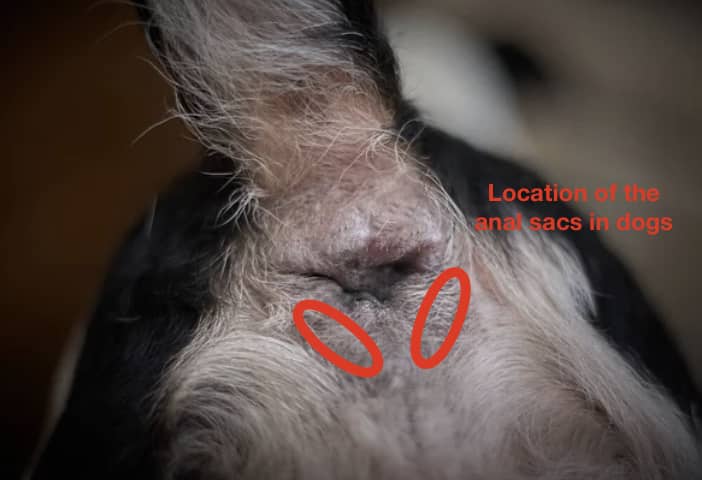
Dogs have two small sacs located just inside the anus, these are called anal glands, anal sacs, or scent glands. These glands are lined with glandular cells that secrete a foul-smelling oily substance. The dog's anal glands empty every time the dog defecates, the act of defecating squeezes the glands and forces the secretion out. You may have noticed your dog dragging his bottom along the ground after he has been to the toilet, this is because sometimes the gland doesn't empty fully and your dog is trying to relieve himself of the discomfort caused by a full anal gland.
It is thought that dogs have anal glands and sacs as a form of identification. This may explain why dogs sniff each other's backend when they meet. Also, since anal gland material is deposited on the feces during defecation, it may help to mark the dog's territory.
Fun fact! When skunks spray, they are deliberating spraying the contents from their anal glands and sacs!
What causes infected anal glands in dogs?
Several different things can cause infected anal glands in dogs, and in severe cases, these can lead to a ruptured anal gland. These include:
- Chronic diarrhea
- Loose anal sphincter muscles
- Changes in muscle tone
- Obesity
- Constipation
The glands may produce more anal gland material than usual in response to food allergies or endocrine diseases (e.g. hypothyroidism, Cushing's disease). This increased production of anal gland material can lead to infected anal glands in dogs.
What are the symptoms of infected anal glands in dogs?
Typical symptoms of infected anal glands in dogs include:
- Scooting
- Excessive licking of the perianal region and beneath the tail
- Reluctance to sit
- Agitation
- Bloody discharge from the anus
- Swelling of the perianal region
How are infected anal glands in dogs diagnosed?
Your veterinarian will perform a rectal exam to evaluate the anal glands. During the rectal exam, your vet may express (squeeze) the anal glands to check for impaction, infection, or abscessation. Your dog may need sedation or anesthesia for this procedure as infected anal glands in dogs are typically very painful.
In some cases, your veterinarian may recommend performing cytology or bacterial culture on the anal gland contents to help guide proper antibiotic selection.
What is the treatment for infected anal glands in dogs?
The treatment for infected anal glands in dogs is usually a combination of antibiotics and topical medication that is infused directly into the anal sac by the veterinarian. Surgery may be required in some cases to remove impacted or abscessed anal glands.
As infected anal glands in dogs are very painful, sedation is often required and used to allow for thorough flushing of the anal sacs and the installation of topical medication. After the procedure, the dog is discharged with an e-collar to prevent licking, oral antibiotics, and anti-inflammatory pain medication. This approach is usually successful (70%) but few dogs may require a second treatment.
In rare circumstances, dogs that have recurring anal gland infections may require surgical removal of the affected anal glands and sacs. This surgery should be performed by a specialist as an improper surgical technique can result in fecal incontinence in some dogs.
Supportive therapy for infected anal glands in dogs
To ease discomfort, you can apply warm compresses to the anal area every 12 hours for 5-7 days. It may be helpful to change to a low-fat, high-fiber diet to reduce impaction and normalize stool consistency. Fiber supplements (e.g. Glandex®) can result in stools that allow anal glands to express themselves more freely.
What are the potential complications of an infected anal gland in dogs?
In some cases, infected anal glands in dogs can lead to abscessation and anal gland rupture. Anal gland abscesses are very painful, infected pockets of pus that can rupture and drain through the skin. If your dog has an anal gland abscess it may require surgical drainage.
Another potential complication of infected anal glands in dogs is perianal fistulas. Perianal fistulas are tunnel-like deformities that connect the infected anal gland to an opening in the skin. These fistulas are very painful and can be difficult to treat.
What are the potential complications of an infected anal gland in dogs?
In some cases, infected anal glands in dogs can lead to abscessation. Anal gland abscesses are painful, infected pockets of pus that can rupture and drain through the skin. If your dog has an anal gland abscess it may require surgical drainage.
Another potential complication of infected anal glands in dogs is perianal fistulas. Perianal fistulas are tunnel-like deformities that connect the infected anal gland to an opening in the skin. These fistulas are very painful and can be difficult to treat.
Do veterinarians recommend frequent anal gland and sac expression in dogs?
The short answer is no. Manually over-expressing the anal glands and sacs can lead to more problems as it can result in atrophy of the anal sphincter muscles. When these muscles atrophy, they are no longer able to effectively express the anal glands and sacs on their own, leading to impaction and infected anal glands in dogs.
If your dog is scooting, excessively licking their perianal region, or showing any other signs of infected anal glands in dogs, make an appointment with your veterinarian right away. Infected anal glands in dogs are painful and uncomfortable, but with proper treatment, your dog will be back to its normal self in no time.
Furthermore, if your dog is having frequent anal gland or sac expressions, it's important to find out why this is happening and address the underlying problem.
Infected anal glands in dogs are a common occurrence. Fortunately, infected anal glands can be treated by antibiotics and topical medication that are infused directly into the infected area of the dog's body for complete relief from pain. Surgery may also be required to remove impacted or abscessed anal glands. Remember not to over-express your dog's anal sacs, as this could lead to further problems such as anal sphincter muscle atrophy. If your dog is scooting, excessively licking their perianal region, or showing any other signs of infected anal glands in dogs, make an appointment with your veterinarian right away for proper treatment.