Hospital Hours: Monday-Friday: 8am-6pm | Saturday: 8am-4pm
(519) 896-0532

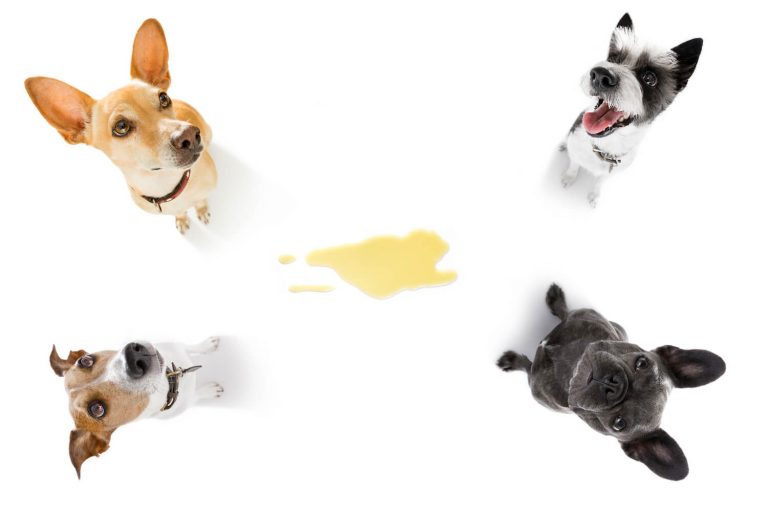
Urinary incontinence is a condition that affects dogs and causes them to lose control of their urination involuntarily. This is different from inappropriate urination where the dog will consciously urinate inside the home. Dogs with urinary incontinence are a common health problem and can often be treated with medications. There are many causes of urinary incontinence in dogs such as side effects of a medication, disorders of the urethral sphincter, systemic diseases such as diabetes mellitus, and anatomical changes to the bladder. The earlier a diagnosis is made and treatment implemented, the better the chances are that the dog will respond favorably. Continue exploring this article to learn more about dogs with urinary incontinence and how you can help your dog if they have urinary incontinence.
Causes of urinary incontinence in dogs are distinguished by bladder and urethral causes. Common bladder causes would include any disorders that cause inflammation of the bladder such as chronic cystitis and urinary tract infections. Urinary incontinence may be caused by anatomical anomalies that bypass normal urethral closure mechanisms and prevent urine from being stored appropriately in the bladder. The most frequent anatomic abnormalities that cause urinary incontinence in canines are ectopic ureters.
Urethral dysfunction most often involves inadequate urethral closure pressure. Common disorders that exhibit urethral dysfunction include urethral sphincter incompetence in older female dogs, intervertebral disc disease, degenerative myelopathy, and other spinal disorders.
Furthermore, any disease or condition that results in urine dilution can contribute to urinary incontinence. Common diseases include diabetes, Cushing's disease, and kidney disease in dogs.
Ectopic ureters are the most frequent cause of urinary incontinence in young dogs with an incidence rate of 9.5%. It is thought to be an inherited disorder, but this has not been proven. It is most frequently diagnosed in female dogs, making up 80-85% of all cases. Ectopic ureters are caused by an incomplete connection between the bladder and the urethra. The ureters, which are responsible for carrying urine from the kidneys to the bladder in dogs, connect with the urinary bladder at a specific location called the trigone. With ectopic ureters this area of connection is abnormal. The affected ureter will attach to the urethra beyond the urethral sphincter, therefore, causing urinary incontinence.
Dogs with ectopic ureters are at risk for developing urinary tract infections and this occurs in approximately 65% of all dogs with ectopic ureters.
Conditions that suddenly cause an increase in urine production and overwhelm the urinary system, therefore, resulting in urinary incontinence. Common conditions that can cause urine dilution are diabetes, Cushing's disease, and kidney disease in dogs.
Some medications can cause excessive urine dilution and therefore urinary incontinence. The most common medication that results in urinary incontinence is prednisone. Prednisone is a common medication that has anti-inflammatory and immunosuppressive actions and is widely used.
The most prevalent cause of acquired urinary incontinence in spayed female dogs is urethral sphincter mechanism insufficiency (USMI). The exact cause is not completely understood and it may be multifactorial. It is thought that the lack of estrogen in spayed female dogs results in urinary incontinence with time as there are estrogen receptors on the urethral sphincter that can help maintain tone. It is unclear however as to why only some spayed female dogs will develop urinary incontinence.
As the flow of urine is controlled by the neurological system, any deficiencies can result in urinary incontinence. Common neurological abnormalities that can result in urinary incontinence in dogs include intervertebral disc disease (IVDD) and degenerative myelopathy (DM).
Clinical signs that suggest urinary incontinence include continuous moistness and urine scalding around the vulva or prepuce. The animal is often oblivious to the occurrence of urination, and the volume of urine is frequently lower than usual. Other clinical signs are dependent on the type of incontinence.
Your veterinarian will start by obtaining a detailed history of your dog. Urinary incontinence must be differentiated from excessive excretion of urine, increased frequency of urination, and behavioral abnormalities leading to inappropriate urination. Next, your veterinarian will perform a thorough physical examination, while evaluating the urinary system in detail.
Some common, non-invasive tests that your veterinarian may recommend include:
There are medications that have been used successfully, but it is first important to identify any underlying conditions and diseases and implement the appropriate treatment. For example, a dog with diabetes mellitus or Cushing's disease will require treatment of its underlying condition to prevent urinary incontinence.
Ectopic ureters -- Surgery is the treatment of choice for correcting ectopic ureters. Most young dogs with ectopic ureters fail to respond to medications that would normally prevent urinary incontinence.
Urethral sphincter incompetence -- Typically seen in middle-aged to older spayed female dogs, they often respond favorably to phenylpropanolamine (PPA; Propalin®). This medication helps to stimulate the urethral sphincter mechanism. For dogs that fail to respond to PPA, estrogen therapy may be used. Both therapies have a very good success rate.
While medications generally have a good success rate, there may not be a complete resolution of urinary incontinence. It is important to make some adjustments to make it easier for you to manage.
Dogs with urinary incontinence can often be treated successfully with medications, but it is important to identify any underlying conditions and diseases. There are many causes of urinary incontinence in dogs, such as side effects of a medication, disorders of the urethral sphincter, systemic diseases such as diabetes mellitus, and anatomical changes to the bladder. The earlier a diagnosis is made and treatment implemented, the better the chances are that the dog will respond favorably.


