If you're a dog owner, then you know that they're prone to getting into all sorts of mischief. And while broken teeth might not be one of the most common injuries, they do happen. In this post, we'll take a look at the symptoms and treatment of a broken tooth in dogs. So if you think your pup might have suffered a broken tooth, keep reading!
How is a broken tooth in dogs classified?
A broken tooth in dogs can be classified in a few different ways:
Enamel fracture: The broken tooth that is confined to only the enamel.
Crown fracture: The broken crown of the tooth has been fractured deep enough to expose the pulp.
Root fracture: A tooth fracture where the root has been broken.
What are the symptoms of a broken tooth in dogs?
Most dogs with fractured teeth don't show any signs of discomfort, even though they experience pain similar to humans. Some dogs however will show symptoms of a broken tooth and may include:
- Chewing on one side of their mouth. This can be evident where there is more tartar development on the side of the broken tooth compared to the other side.
- Excessive salivation and drooling
- Pawing at the face, especially the side of the broken tooth
- Teeth grinding
- Swollen face, suggesting an infection of the broken tooth
- Reluctancy to chew on kibble or hard objects
What is the treatment for a broken tooth in dogs?
If you suspect that your dog has broken a tooth, there are two therapeutic options: tooth extraction or endodontic therapy. An example of endodontic therapy includes a root canal or pulp therapy.
If the broken tooth is considered to be in good condition and not severely damaged, then it can sometimes be treated with endodontic therapy which will allow for the tooth to be saved. However, if the broken tooth is in bad shape or there is significant damage, then the tooth will likely need to be extracted.
Endodontic therapy can be performed on any tooth, but it is generally only considered for the canines and large premolars because of how important those teeth are.
What are the consequences of not treating a broken tooth in dogs?
If a broken tooth in dogs is left untreated, it can lead to a number of problems. The most common consequence would be chronic pain associated with the broken tooth. Additionally, the risk of infection and abscess formation increases significantly. If an abscess develops as a result of a broken tooth, you will notice swelling along the facial area, including in the cheeks and between the eye and nose area.
How to prevent a broken tooth in dogs?
The best way to prevent a broken tooth in dogs is by providing them with chew toys and bones that are appropriate for their age and size. Anything that is harder than teeth has the increased potential to cause a broken tooth in dogs. The 2 most common culprits for tooth fracture in dogs are antlers and compressed nylon toys. When these objects are placed between the premolars that overlap to provide a shearing capability, the teeth can become damaged and break.
Furthermore, years of chewing on objects such as bones and hard toys can result in microfracture of the teeth, increasing their chances of fracture in the future.
If you are looking for objects that you can safely allow your dog to chew on, please read our post on the top vet-recommended chews for dogs.
What are the most common teeth for fractures in dogs?
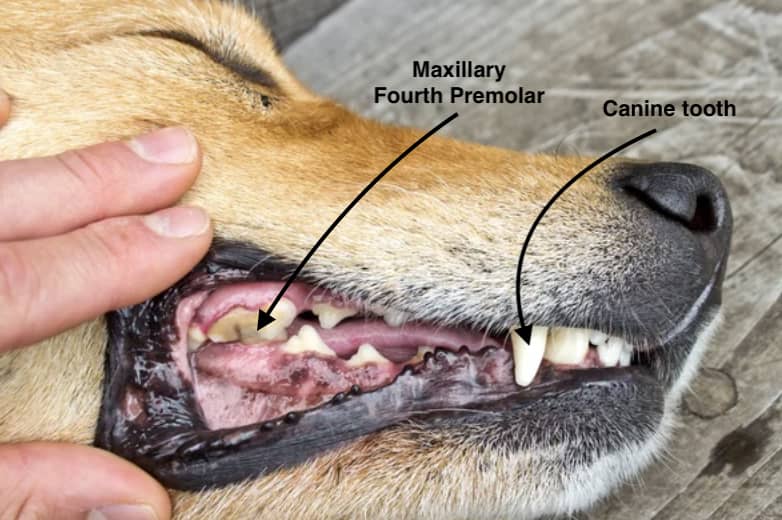
The most common teeth for fracture in dogs are the canines and maxillary fourth premolars, the large pointed tooth near the back of the upper mouth. This is likely because these teeth are the longest and protrude the furthest out.
So, there you have it! Those are the symptoms and treatments of a broken tooth in dogs. If you think your pup may have broken a tooth, be sure to contact your veterinarian right away.