Hospital Hours: Monday-Friday: 8am-6pm | Saturday: 8am-4pm
(519) 896-0532

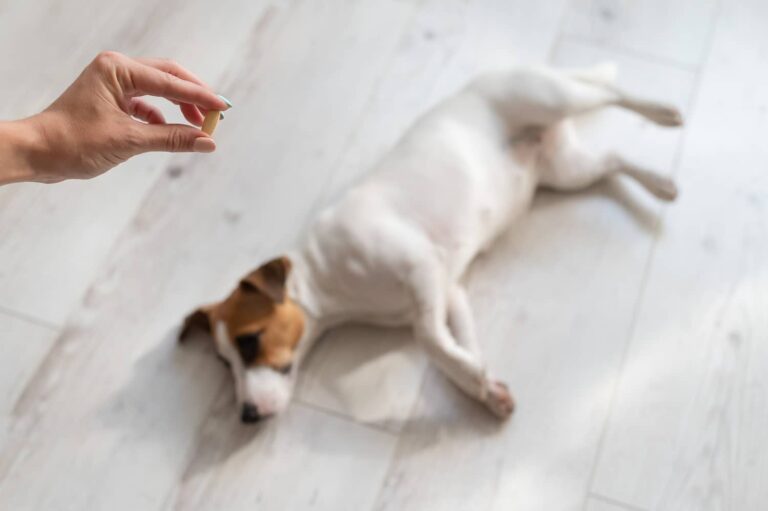
Acepromazine is a prescription sedative we use in dogs, most often before anesthesia and surgery. It works well for that. It doesn't take away fear though, so I don't reach for it when a dog is frightened of storms, fireworks, or being left alone. The usual oral dose is 0.25 to 1 mg per pound.
Key Takeaways
Acepromazine (most vets just call it "ace") has been around a long time, and it still earns its place in our drug cupboard. But it gets asked about for the wrong reasons more than almost any other medication I prescribe. Here's what it does, what it doesn't do, and how we use it.
Acepromazine maleate is a tranquillizer and sedative for dogs. It's part of a drug family called the phenothiazines.
The label approves it for two things: tranquillization, and use as a pre-anesthetic before surgery.1 It helps us handle dogs for exams, treatments, grooming, and X-rays. It's also used off label to settle vomiting.
It comes as a tablet and as an injection. I prefer the injection when I have the choice. Oral absorption varies a lot between dogs, so a tablet that flattens one dog barely touches another. The injectable version is far more predictable, and my team can give it here.
Acepromazine does not relieve pain. A dog lying quietly under ace can still be sore, so we pair it with proper pain control whenever there's pain to treat.
Acepromazine blocks dopamine receptors in the brain.2 Dopamine is one of the chemical messengers that drives movement and alertness. Turn it down and the dog gets sleepy, their muscles relax, and they move around less.
It also relaxes the muscle in the walls of blood vessels, which makes those vessels widen.2 That's the reason blood pressure drops on this drug, and it's the source of most of the problems we'll get to below.
Given by injection, sedation starts within about 10 minutes and lasts 4 to 6 hours.2 Tablets take longer to kick in, usually 30 to 60 minutes.
Most of the acepromazine I give is part of a pre-med, in the half hour before a dog goes under.
A calm dog needs less anesthetic drug to get to the same depth, and less anesthetic means a smoother, safer procedure. It also means a quieter recovery on the other side. If you want the detail on how we run this, we've written about our anesthesia and patient monitoring and about surgery at Kingsdale.
Some dogs can't be safely examined, clipped, or X-rayed while awake. Ace lets us get that done without a fight, and without a full anesthetic.
That's restraint, not comfort. The dog still knows exactly where they are and what we're doing.
Acepromazine has some anti-nausea effect and has been used for car sickness for years.
I rarely use it for that now. Cerenia (maropitant) is a better tool for a dog that throws up in the car, because it targets nausea directly without knocking the dog out. If travel is your problem, start with our guide to motion sickness in dogs.
Acepromazine sedates a dog without touching how the dog feels. A dog lying flat on the floor through a thunderstorm can be every bit as frightened as one pacing and panting. They just can't do anything about it any more.
It can also make things worse. Veterinary behaviourists have been clear on this: acepromazine can increase noise sensitivity, and it isn't recommended for noise aversion.3 A dog already frightened of thunder can come out of the storm worse than they went into it.
Owners often tell me the drug worked because the dog went quiet. Quiet is the easiest thing in the world to mistake for calm.
So I don't prescribe it for storms, fireworks, or separation anxiety. There are better options now, and they actually reduce fear rather than hiding it.
If anxiety is what you're dealing with, ask your vet about these instead. Most of them work best given before the trigger, not during it.
| The problem | What I'd reach for |
|---|---|
| Storms and fireworks | Sileo (dexmedetomidine gel), gabapentin, or trazodone3 |
| Vet visits and grooming | Gabapentin or trazodone at home before the appointment |
| Separation anxiety | A daily medication such as fluoxetine, plus a training plan3 |
| Car sickness | Cerenia for the nausea, plus short practice trips |
The label dose for tablets is 0.25 to 1 mg per pound of body weight.1 That's a wide range, and where your dog lands in it depends on their size, their health, and how deeply they need to be sedated.
I start at the low end. You can always give a second dose. You can't take one back.
| Dog's weight | Label range, oral | Where I'd usually start |
|---|---|---|
| 10 lb | 2.5 to 10 mg | 2.5 mg |
| 25 lb | 6.25 to 25 mg | 6.25 mg |
| 50 lb | 12.5 to 50 mg | 12.5 mg |
| 100 lb | 25 to 100 mg | 25 mg |
Injectable doses are far lower, often around a twentieth of the oral dose.2 That's a common source of confusion, so never work out an injection dose from a tablet dose.
This table is a reference, not a prescription. Acepromazine is a prescription drug for good reason. Too much can cause slow breathing, a slow heart, collapse, and seizures. Use the dose your veterinarian gave you for your dog. If you're unsure, call us at (519) 896-0532.
Most dogs handle acepromazine well. These are the effects we watch for.
Breed matters more with this drug than with most. Tell your vet what your dog is, and if they're a mix, tell them what's in the mix.
| Breed or group | What happens | What we do |
|---|---|---|
| Boxers, especially UK lines | Severe drops in heart rate and blood pressure4 | Much lower dose, or a different drug |
| Greyhounds and other sighthounds | Deeper, longer sedation than expected4 | Lower dose |
| Giant breeds | A normal dose can last 12 to 24 hours4 | Lower dose, based on lean body weight |
| Collies, Aussies, Shelties and herding crosses | The MDR1 gene lets more drug reach the brain5 | Test for MDR1, then reduce the dose |
| Flat faced breeds, Bulldogs and Pugs | Airway trouble, plus a strong vagal response2 | Use with care and monitor closely |
If you have a Collie, an Australian Shepherd, or a herding cross, MDR1 testing is a cheek swab and it's worth doing once. Roughly 70% of Collies and half of Australian Shepherds carry the mutation.5 It changes how we dose several common drugs, not just this one.
Tell your vet about every medical problem and every product your dog is on before they get acepromazine. That includes supplements, herbal products, and flea and tick treatments.
The old teaching was that acepromazine lowers the seizure threshold and should never be given to an epileptic dog. That teaching hasn't held up.
Two studies looked at this directly. Tobias and Marioni-Henry gave ace to 36 dogs with a seizure history and saw no seizures within 16 hours.6 McConnell and colleagues followed 31 dogs with a seizure history and found the same picture.7 Neither study found the drug triggered seizures.
I still take it case by case, and I'd rather use something else in a poorly controlled epileptic. But if your dog has seizures and needs sedation, this isn't the automatic no it used to be. Talk it through with your vet. If your dog is on phenobarbital, that's part of the same conversation.
These are the ones that come up.
Call your vet straight away, or your nearest emergency vet if we're closed. Don't wait to see how it goes.
Signs of an overdose are heavy sedation, weakness, pale gums, stumbling, changed pupil size, shallow breathing, collapse, and seizures. Bring the packaging so we know the strength and how much was in the bottle.
Treatment depends on timing. If the tablets went down in the last hour or so, we may be able to stop some of it being absorbed. After that we're supporting the dog while the drug clears, mostly intravenous fluids to hold the blood pressure up and something to keep them warm. Most do well. They just need to be somewhere we can watch them.
Used before anesthesia, or to get a difficult procedure done safely, acepromazine does exactly what we need it to do. Used for fear, it's the wrong drug, and there's better medicine available now than there was when most of us learned to reach for it.
If your dog has been prescribed acepromazine and you're not sure how to use it, or you suspect anxiety is the real problem, give us a call at (519) 896-0532.
Sources


