Published January 18, 2022 · Updated January 9, 2025 · 6 min read
Panosteitis (also known as pano) is a disease primarily affecting the long bones of the legs of dogs. The cause of panosteitis is unknown, but it is thought to be due to large-breed puppies being fed protein-rich food. Symptoms of Panosteitis include lameness, pain, inflammation, fever, and changes in the bone marrow, where the degeneration and replacement of bone marrow fat by fibrous tissue occur. Treatment for panosteitis consists mainly of pain relief and rest. This condition primarily affects large-breed puppies (such as German Shepherds) between 6-24 months of age. Most cases resolve spontaneously. Read on to find out more about what causes panosteitis and how you can help your dog if he or she is diagnosed with panosteitis.
What is panosteitis in dogs?
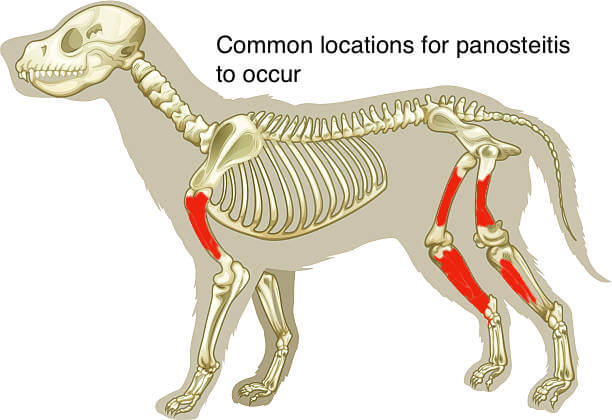
Panosteitis is a condition affecting the long bones of the limbs, such as the humerus and femur, specifically impacting the bone marrow cavity. In young, large breed dogs predominately affected, panosteitis is a developmental disease that causes self-limiting, acute limb lameness. Signs of lameness can range from slight to severe. As this condition occurs almost exclusively in young, growing dogs, it is also known as growing pains.
Common locations for panosteitis to occur in dogs
What large breed dogs are most affected by panosteitis?
The most common breed that develops panosteitis is German Shepherd dogs, which are particularly predisposed to this developmental orthopedic disease. The basset hound is another frequent type, but other large breeds can be affected as well.
Males are four times more likely than females to be affected and young dogs 6-18 months of age are most commonly affected. Waxing and waning phases can occur frequently up to two years of age, but they are uncommon after that. In middle-aged dogs, occurrences have been recorded only rarely.
What are the causes and risk factors of panosteitis in dogs?
Panosteitis is a complex condition, and its exact causes are still not fully understood. However, several factors are thought to contribute to its development. Genetics plays a significant role, as panosteitis is more common in certain breeds, such as German Shepherds, suggesting a possible hereditary component.
Rapid growth is another contributing factor, with large and giant breed dogs being more prone to panosteitis due to their accelerated growth rates. Hormonal changes during growth and development may also influence the onset of this condition.
Nutrition is a critical factor, as a diet high in protein and calcium may contribute to the development of panosteitis in some dogs. Additionally, some research suggests that panosteitis may be triggered by a viral or bacterial infection, although this is less commonly observed.
Risk factors for panosteitis include:
Age: Panosteitis typically affects dogs between 6 and 18 months of age.
Breed: Large and giant breed dogs are more prone to panosteitis.
Sex: Male dogs are more commonly affected than female dogs.
Size: Dogs that are overweight or obese may be at increased risk of developing panosteitis.
What are the causes of panosteitis in dogs?
According to recent research, the feeding of specific protein-rich, high-calorie commercial dog foods is linked to an increased occurrence of panosteitis. Protein-rich diets can cause swelling of the long bones during development.
This swelling can cause pressure against the blood vessels within the long bones, affecting the bone marrow's ability to produce new blood cells, resulting in necrosis and significant inflammation within the bones. Eventually and with time, the affected bone returns to normal and the pain subsides.
What are the symptoms of growing pains in dogs with panosteitis?
Dogs with panosteitis are generally young, fast-growing, large-breed dogs that suddenly experience clinical signs such as lameness in one or more limbs. Shifting, intermittent, and waxing-waning periods of lameness may be observed. Palpation of the afflicted long bones elicits pain. Some animals are sluggish, hesitant to move, have a poor appetite, and have a fever. The clinical phase lasts for around two to three weeks.
How is panosteitis in dogs diagnosed?
A young dog of a susceptible breed, such as a German shepherd, with acute lameness in one or more limbs increases the chance of panosteitis. The disorder affects more than one limb and can shift from one limb to the next during distinct episodes. Palpating or pressing on the afflicted long bones generally produces a strong pain response.
Radiographs (X-rays) can give us diagnostic clues. The challenge with diagnosing panosteitis on X-rays is that the dog will show clinical symptoms sooner than what is revealed on the X-ray. Changes within the bones that would be able to be detected on X-rays occur 5-10 days after the clinical presentation. Therefore, if symptoms are acute, the current X-rays may reveal normal-looking bones.
Diagnostic procedures
Diagnosing panosteitis typically involves a combination of physical examination, medical history, and diagnostic imaging. During a physical exam, the veterinarian will assess the dog’s overall health and identify any signs of pain or lameness. A detailed medical history is crucial to determine the dog’s age, breed, and any previous health issues that might be relevant.
Radiographs (X-rays) are commonly used to evaluate the affected bones and confirm the diagnosis of panosteitis. However, changes within the bones may not be immediately visible on X-rays, as they can take 5-10 days to appear after clinical symptoms begin. In some cases, nuclear bone scans may be employed to provide a more detailed evaluation of the affected bones and confirm the diagnosis.
What is the pain relief treatment for panosteitis in dogs?
Panosteitis is considered a self-limiting disease, which means it will resolve spontaneously over time and once the dog is mature. As there is no direct, specific treatment for panosteitis, treatment involves managing pain and inflammation. For a giant breed puppy, a specially formulated diet is essential to promote slow and steady growth, which can reduce the risk of developmental orthopedic conditions and potentially lessen the impact of panosteitis. For mildly affected dogs, non-steroidal anti-inflammatory drugs (NSAIDs) are often used with success. In dogs that are more severely affected, such as having a fever and reduced appetite, exercise restriction and corticosteroids may be prescribed to help alleviate symptoms.
How long does panosteitis last in dogs?
After the first 2-3 weeks, most dogs show an improvement in mobility. The lameness may then move to a different leg. Waxing and waning episodes can continue for several months. The illness usually goes away as young adult dogs reach skeletal maturity, around 1-1.5 years of age.
Recovery and prognosis
The prognosis for dogs with panosteitis is generally good, with most dogs making a full recovery. However, the recovery process can be lengthy, and some dogs may experience recurring episodes of lameness. Recovery time can vary depending on the severity of the condition and the individual dog, but in general, dogs can expect to recover within 2-6 months.
While the prognosis is positive, it’s important to note that some dogs may experience recurring episodes of lameness. These episodes can be managed with appropriate treatment and care, ensuring the dog remains comfortable throughout the recovery process.
How can I prevent panosteitis from happening in my dog?
There is not one single entity that can prevent panosteitis from occurring. As the current research suggests however that panosteitis can be a result of feeding a food disproportionate amounts of protein and calories, it is best to feed your large breed dog a puppy food that has been formulated for large breed puppies. Feed the recommended amounts as mentioned on the bag and make sure that your puppy remains in ideal body condition throughout its growth stages.
In conclusion, panosteitis is a self-limiting condition primarily affecting the long bones of young, large-breed dogs, such as German Shepherds. Often referred to as growing pains, this condition causes sudden onset lameness, pain, and inflammation due to changes in the bone marrow cavity. While the exact cause is not fully understood, factors like genetics, rapid growth, and high-protein diets are believed to contribute. Diagnosis involves physical exams and X-rays, and treatment focuses on pain relief and managing inflammation. Most dogs make a full recovery as they reach skeletal maturity, highlighting the importance of proper nutrition and care during growth
Written by
Dr. Brad Hinsperger, B.Sc., DVM
Dr. Hinsperger is a practicing veterinarian with 20 years of dedicated experience in small animal medicine and surgery at Kingsdale Animal Hospital.