Hospital Hours: Monday-Friday: 8am-6pm | Saturday: 8am-4pm
(519) 896-0532

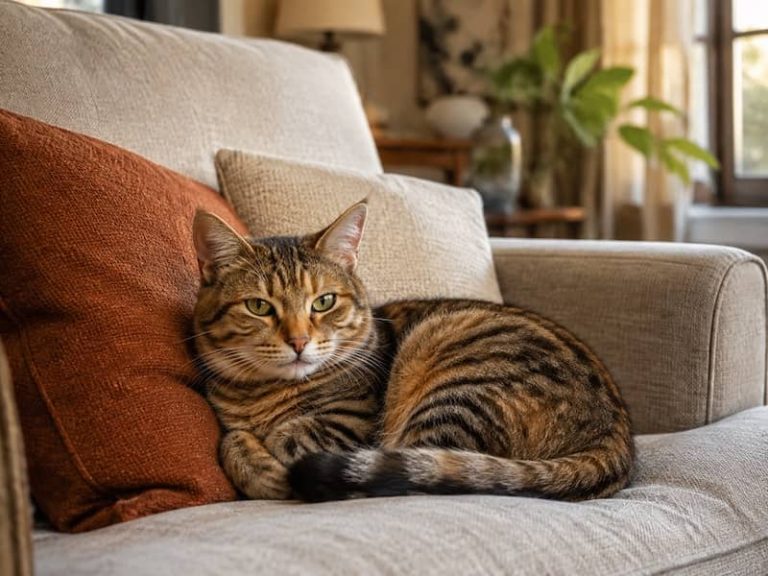
A swollen lip in a cat is almost always one of three things: an indolent ulcer (most people call it a rodent ulcer), a lip granuloma, or gum disease. The first two are allergic reactions, and they're the ones I see most weeks. Most cats do well once we find the trigger and treat it. The exception is a lip that's swelling quickly, bleeding, or stopping your cat from eating, and that one needs to be seen today.
Key Takeaways
See a vet the same day if: your cat can't eat or drink, the swelling is spreading into the face or jaw, there's bleeding or a bad smell from the mouth, your cat is quiet and hiding or feels feverish, or a sore has been slowly growing for weeks in an older cat. If we're closed, our friends at the emergency veterinary clinic in Kitchener can see you. Otherwise you can book online or call us at (519) 896-0532.
Swollen lips look alarming, and owners usually arrive worried it's something their cat got into. Most of the time it isn't. Below is what each cause looks like, what sits behind it, and what I'd do about it.
| Cause | Where you'll see it | What it looks like | Usually caused by | First treatment |
|---|---|---|---|---|
| Indolent (rodent) ulcer | Upper lip, often tucked underneath where it's hard to spot | Red, hollowed-out sore with a crusty surface and raised edges1 | Allergy, most often flea bites2 | Flea control, plus steroids or cyclosporine2,3 |
| Lip granuloma | Lower lip, usually right at the midline | Firm, smooth swelling. Sometimes red or raw, often not1 | Allergy, sometimes contact with a plastic bowl5 | Remove the trigger, plus steroids2 |
| Gum disease | Along the gumline, with the lip puffy over top | Red swollen gums, tartar, bad breath6 | Plaque bacteria building up under the gumline6 | Dental cleaning under anesthetic7 |
If you're trying to work out which one you're looking at, these two photos show the difference.
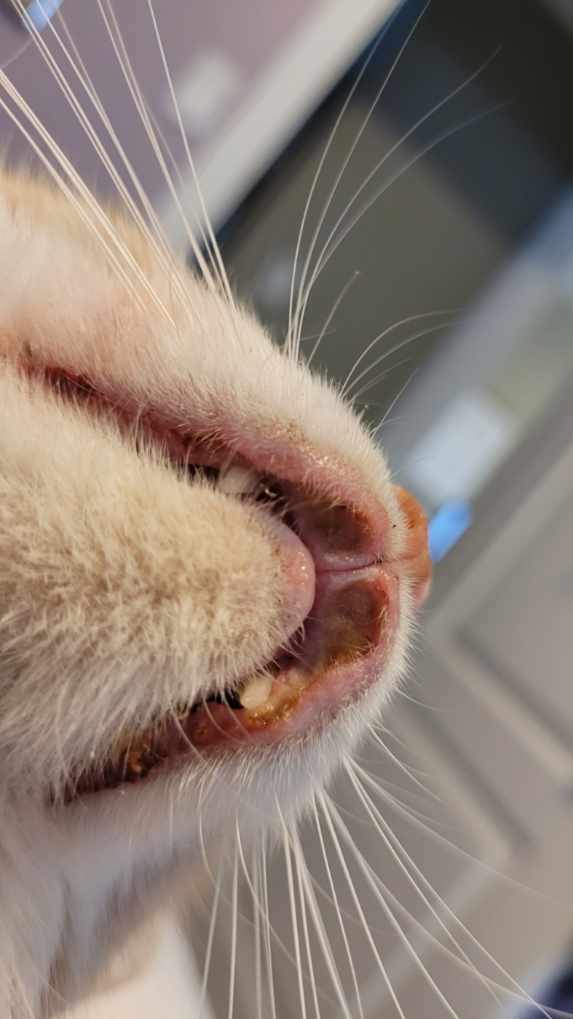

This is the one I see most. It affects the upper lip, and it often sits on the inside edge, so it's easy to miss unless you lift the lip and look underneath.
The name is a leftover from the days when people thought these came from hunting rodents. They don't. An indolent ulcer is one of three related allergic skin reactions in cats, grouped together as the eosinophilic granuloma complex.1,4 Eosinophils are a type of white blood cell the body sends in during an allergic reaction, and they're what a pathologist finds when they look at these lesions under a microscope.
They start as a reddish, hollowed-out sore with a crusting surface, most often on the upper lip.1 As they progress they thicken and develop raised borders, which is what makes the lip look puffy. The colour can shift to orange or tan, and there's often a bad smell with them.
Here's the part that surprises owners: these usually aren't painful or itchy.1 I've seen plenty of cats with an impressive-looking ulcer who show no sign of bothering with it at all. Some do rub or paw at the face, and that rubbing makes the swelling worse, but a cat acting completely normal doesn't rule this out.
Less often, cats get these same ulcers inside the mouth, separate from the lips.
An allergy, in almost every case. The immune system over-reacts to something and the lip is where it shows up.
Flea bite allergy is the most common trigger, followed by environmental allergies and food allergies.2 Some cats also seem genetically prone to it.
Owners often tell me their cat never goes outside, so fleas can't be it. I'd still rule fleas out first. It only takes a handful of bites in an allergic cat, and fleas come inside on other pets and on us. Strict flea control is the cheapest and fastest test we have. If you want the longer version, we've written about allergies and skin problems in pets.
I start with a full skin exam, not just the lip. Where else the cat is itchy, and what the rest of the coat looks like, usually tells me more than the ulcer does.
Depending on how it looks, I may recommend a biopsy. That's mainly to rule out cancer, because an oral tumour can look similar early on. Our in-house diagnostics cover the skin cytology and sampling side of this.
Calming the lesion down buys your cat comfort. Finding the allergen is what stops it coming back. You need both.
A lip granuloma is the second form of the same allergic complex. Cornell calls it the most commonly diagnosed of the three.9 In our practice I see more of the upper lip ulcers, which probably says more about what brings people in than about what's actually most common.
These show up as firm, raised swellings, and in cats it's usually the lower lip right at the midline. Sometimes they're ulcerated and look red and raw. More often they just look like a smooth swelling, which gives the cat a pouting expression. Owners often describe it as a fat lip that appeared overnight.
The same lesions can turn up elsewhere. Merck lists the head, face, bridge of the nose, ears, paw pads, chin, mouth and thighs, with linear versions running down the back legs.1
The same short list as the ulcers: fleas, environmental allergens, food, and sometimes a genetic tendency.1,2
One extra thing worth checking is the food bowl. Plastic bowls are a recognised cause of chin and lip irritation in cats, and swapping to stainless steel, ceramic or glass is a no-cost thing to try.5 It won't fix a true granuloma on its own, but I'd rather rule it out early.
I work these up the same way. Full skin exam, flea control, and usually a diet trial or allergy testing to find the trigger.
Treatment is usually steroids to bring the swelling down, alongside whatever we're doing about the trigger. Cyclosporine is the alternative when a cat can't take steroids, or when we need something for the long run.3
Most of these respond well. The ones that frustrate me are the cats where we never pin down the allergen, and those need a management plan rather than a cure.
The third cause has nothing to do with allergies, and it's the one that gets overlooked.
Gum disease starts when plaque bacteria build up at and under the gumline. The gums become inflamed and infected, and as that progresses the swelling spreads into the tissue around the teeth and sometimes out to the lip.6
Gingivitis is the early stage, inflammation of the gums on their own, and a proper cleaning reverses it. Periodontitis is what comes next, when the ligament and bone holding the tooth start breaking down. That damage doesn't come back.6 Which is why I'd rather see a cat early than be impressive later.
Besides the puffy lip, watch for foul breath, drooling, dropping food or chewing on one side, and visible tartar. In advanced cases you'll see loose or missing teeth, bleeding gums, and obvious discomfort.
Plenty of cats show none of this. They keep eating, they keep purring, and the only reason we find it is the exam. That's a large part of why I push regular check-ups.
Infection around the tooth roots can spread, and untreated periodontitis costs teeth permanently.6
There's also the part owners don't see. Severe dental disease hurts. Cats are good at not showing it, and owners regularly tell me their cat became playful again after a dental, which tells you how they were feeling beforehand.
Treatment is a professional cleaning under general anesthetic, with dental X-rays, and extractions where teeth can't be saved.
On the anesthetic question, which comes up a lot: cleaning has to happen below the gumline, and that isn't possible on an awake cat. The 2019 AAHA Dental Care Guidelines are blunt about it. Professional cleaning means scaling above and below the gumline under general anesthesia, and anesthesia-free dentistry is not appropriate.7 Scraping visible tartar off an awake cat makes the tooth look better and leaves the disease where it is. You can read how we handle dental care and dental X-rays at Kingsdale.
For prevention, brushing is the gold standard if your cat tolerates it. Dental diets, treats and toys help. Regular exams catch it early, which is the whole point.
The three above cover most cases, but not all. These are the others I check for.
That last one is why I'm cautious about treating a swollen lip with steroids without looking properly first. Steroids will shrink swelling regardless of the cause, and a tumour that looks better for a few weeks is a tumour we've lost time on.
I'll start with a full physical and a look in the mouth, then check the skin over the rest of the body for signs of allergy. I'll ask what your cat eats, what flea prevention they're on, whether anything changed recently, and whether any other pets in the house are itchy.
From there it depends. Many cats leave with flea treatment and a short course of medication. Some need a biopsy or cytology to confirm what we're dealing with. If the mouth is the problem, we'll book a dental with X-rays so we can see below the gumline.
Bring the food bag or a photo of the label, and let us know exactly what flea product was last used and when. Those two answers save a lot of guesswork.
The most common cause of a swollen bottom lip in a cat is a lip granuloma. A lip granuloma is most often a hypersensitivity response to an allergen. In some instances, it can be due to eating or drinking from plastic bowls or dishes.
If the swollen lip is caused by a rodent ulcer or lip granuloma, it may go away if the offending allergen has been removed. Otherwise, you should see your veterinarian for a diagnosis and treatment plan.
No, never give your cat any medication without consulting your veterinarian first. Some medications can be toxic to cats, and your veterinarian will need to determine the underlying cause of the swollen lip before prescribing any treatment.
Most swollen lips turn out to be one of these three, and most of them do well once we know which one we're dealing with. What I'd avoid is waiting it out, or reaching into the medicine cabinet. The treatment is different for each of them, and one of the things we're ruling out is cancer.
If your cat's lip is swollen and you're in Kitchener, Waterloo or Cambridge, book an appointment or call us at (519) 896-0532 and we'll take a look.
Sources


