Hospital Hours: Monday-Friday: 8am-6pm | Saturday: 8am-4pm
(519) 896-0532

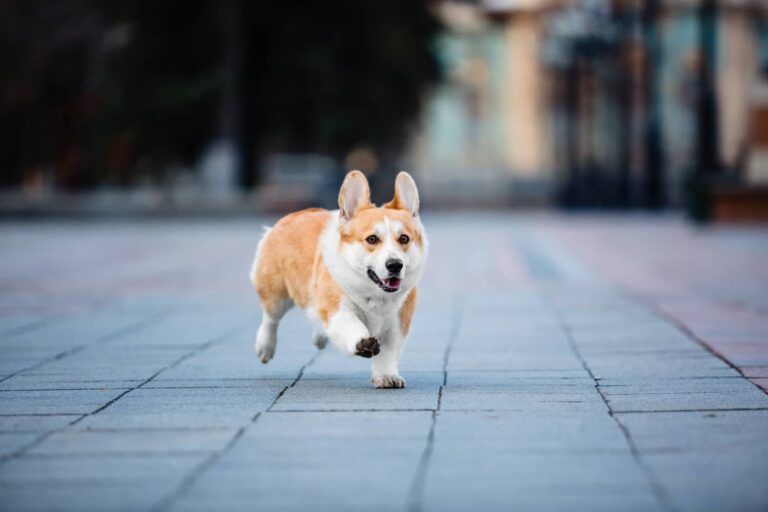
The five causes I see most often for a dog who's panting and pacing are reflux esophagitis, canine cognitive dysfunction, stress and anxiety, pain, and disease inside the chest. Before you work through those, though, there's a short list of emergencies that look exactly the same from across the room. Rule those out first, because with one of them you have hours, not days.
Key Takeaways
Call us now, don't wait for morning, if your dog is retching without bringing anything up, has a swollen or hard belly, has pale, white or bluish gums, is breathing more than 30 times a minute at rest, can't get comfortable lying down, has collapsed or gone wobbly, or feels hot after time outdoors. Call (519) 896-0532 or see our emergency information.
Sometimes, yes. Panting and pacing on their own are vague, but paired with the right second sign they point at a handful of conditions that get worse by the hour.
The one I want every owner to know is gastric dilatation-volvulus, or bloat. The stomach fills with gas and twists. Merck's description of the presentation is nonproductive retching, hypersalivation and restlessness, often with a distending abdomen.1 That's a dog pacing, drooling, and trying to be sick without producing anything. It's most common in large, deep-chested breeds such as Great Danes, German Shepherds, Weimaraners, Standard Poodles and Basset Hounds.1
Bloat is a surgical emergency. Overall mortality sits around 25 to 30%, and one of the identified risk factors for death is simply having signs for more than six hours before being examined.1 If that description fits what you're watching, stop reading and call.
| What you're seeing alongside the panting | What I'd be thinking | What to do |
|---|---|---|
| Retching or gagging with nothing coming up, drooling, belly looks swollen or feels tight | Bloat (GDV)1 | Emergency. Come in now, call from the car |
| Hot day or recent exercise, frantic panting, drooling, wobbly or confused | Heatstroke2 | Emergency. Start cooling with cool water and come in2 |
| Pale, white or grey gums, weakness, collapse, distended abdomen | Internal bleeding, often a ruptured splenic mass3 | Emergency. Come in now |
| Over 30 breaths a minute at rest, belly heaving, gums blue or grey, won't lie down | Heart or lung disease in crisis4 | Emergency. Keep the dog still and come in |
| Panting settles when the trigger stops, dog is otherwise bright, eating, normal gums | Anxiety, mild pain, or being warm | Book a regular appointment |
Three things you can check at home before you call us. They're the same three I start with when a dog comes in for this.
Count the resting breaths. Watch the chest while your dog is asleep or lying quietly and count for 30 seconds, then double it. Under 30 breaths a minute is where I want to be. In a study of dogs with stable, medically controlled left-sided heart failure, the median sleeping respiratory rate was 20, with only one dog in the group at 30 or above.4 So over 30 at rest is meaningful even in a dog already being treated for heart disease.
Look at the gums. Lift the lip. They should be bubblegum pink and wet. Press one with your thumb and the colour should come back in under two seconds. Pale, white, grey, blue or brick red are all abnormal. Pale gums together with panting is one way a bleeding splenic mass presents.3
Take the temperature if you can. Normal is 100.5 to 102.5°F, and heatstroke is defined from 105°F.2 If your dog has been outside on a warm day and is panting frantically, don't drive first and cool later. Cornell's guidance is to start cooling with cool water immediately and keep cooling on the way to the hospital.2
If all three are normal and your dog is bright, eating and settling between episodes, you've bought yourself time to work through the list below.
This is the one that gets missed most. Stomach acid moves backwards into the esophagus and inflames the lining, which hurts. A dog with a sore esophagus won't settle, so they pace and pant, and it's usually worse after eating or after lying down.
Regurgitation is the classic sign, but the quieter ones are the tells: drooling, repeated swallowing, lip licking, holding the head and neck extended, going off food, and sometimes a chronic cough.5
It shows up in any age or breed, but I see it more in older dogs, and reliably after general anesthesia. Reflux is associated with anesthesia itself and with drugs that relax the lower esophageal sphincter, including atropine and acepromazine.5 If your dog had a procedure in the last few days and is now restless at night, this is where I'd look first.
Treatment works on four fronts: bring the acid down, tighten the sphincter, empty the stomach faster, and control the pain.5 In practice I reach for omeprazole, which Merck lists as preferred over an H2 blocker in severe cases, often with metoclopramide to move food out of the stomach.5 A sucralfate slurry coats and protects the damaged lining.5 Small, frequent, low-fat meals help.5
Please don't reach for a human antacid off the shelf. Dosing is different, timing matters more than people expect with omeprazole, and if the real problem is underlying acid reflux rather than one bad night, it needs a plan rather than a tablet.
CCD is the dog version of dementia. Changes in the brain drive a gradual decline in memory, learning, awareness and perception, and one of the earliest things owners notice is a dog who wanders and pants in the evening instead of settling.
The pacing comes from disorientation. The dog stops recognising a room they've slept in for ten years, so they keep moving through it looking for something familiar.
Age is the strongest driver. In the Dog Aging Project's analysis of 15,019 dogs, the odds of CCD rose 52% with each additional year of age once other factors were controlled for.7 The same study found the odds were 6.47 times higher in dogs described as not active compared with very active dogs.7 That's the strongest argument I know for keeping an older dog walking and working their nose daily.
Other signs to look for are altered sleep, less interest in the family, odd responses to familiar things, and house soiling in a previously clean dog. They creep in slowly, which is exactly why they get written off as normal aging. We cover the pattern in more detail in our guides to the signs of dementia in dogs and sundowning.
We can't reverse it. We can slow it and make the nights easier, with diet, supplements, environmental changes and medication, and starting earlier gives you more to work with.
Anxiety is a common cause and worth taking seriously. In a survey of 13,715 Finnish dogs, noise sensitivity was the single most common anxiety-related trait at 32%, with fear of fireworks at 26% and general fearfulness at 29%.6
The dog has adrenaline to burn and nowhere to put it, so they move.
What separates it from the rest is a trigger and an off switch. Anxiety-driven panting starts with something, a storm, a firework, you picking up your keys, and it winds down once the trigger passes. Panting from pain or a chest problem doesn't respect the schedule.
You'll often see other signs alongside it: barking, whining, trembling, destructiveness around exits, and appetite that drops when you leave. If that's the pattern, it's very treatable, with a plan built around the trigger and, where it's warranted, anti-anxiety medication. Trazodone is one I use often for situational anxiety.
Panting is one of the few ways a dog can show pain, and pacing is the search for a position that doesn't hurt. The list of possible sources is long: arthritis, a disc, dental disease, a soft tissue injury, or something internal like pancreatitis.
Chronic pain is harder to spot than acute pain, because the dog has adapted. Look for stiffness in the first few minutes after getting up, reluctance to do stairs or jump into the car, licking one area, slowing down on walks, and a shorter fuse than usual.
Here's the pattern I'd flag: an older, arthritic dog who is fine all day and paces at night. That's often pain that was masked by daytime activity and distraction, surfacing once everything goes quiet.
It's worth testing. If a trial of appropriate pain relief settles the nights, you've learned something a scan might not have told you. Please don't use human anti-inflammatories to run that test at home, because ibuprofen and naproxen cause kidney and gastrointestinal injury in dogs. A veterinary NSAID such as carprofen is the appropriate tool, and it needs bloodwork behind it.
Anything inside the chest that gets in the way of oxygen delivery will produce panting, and the dog paces because they can't find a position that makes breathing easier. Heart disease, pneumonia, fluid around the lungs and chest masses all sit here.
This is the group where the breathing rate does the most work for you. Over 30 breaths a minute at rest is the number to act on.4 Watch how they're breathing too: effort in the belly, elbows held out from the body, a stretched-out neck, or refusing to lie down at all are all signs of real respiratory distress.
Other things to look for are coughing, tiring quickly on walks, gums that aren't pink, and fainting or collapse episodes.
A dog in respiratory distress can decompensate from handling and stress alone. Keep them quiet and cool, skip the bath and the car harness wrestling match, and tell us on the phone that you're on the way with a dog who's struggling to breathe.
Five causes cover most of what comes through the door. These four come up often enough to be worth checking.
Cushing's syndrome turns up in middle-aged and older dogs, and panting sits on Merck's core list of its clinical signs, alongside increased drinking and urinating, increased appetite, a pot-bellied appearance, muscle wasting and thin skin or hair loss.8 A dog who pants at rest and empties the water bowl twice as fast as they used to is worth a blood test.
Medication is the one that's easy to miss, because the cause is sitting on your kitchen counter. Panting is a known effect of steroids: in one prospective study of dogs on an immunosuppressive dose of prednisone, 55% developed excessive panting.9 Opioids can cause panting and a restless, dysphoric pacing too. If it started within a few days of a new prescription, tell us, because dose and timing can often be adjusted. Our guides to prednisone and hydrocodone go through what to expect.
Anemia means fewer red cells, so less oxygen gets carried and the body compensates by breathing faster. Pale gums and lethargy are the giveaways. The cause can be anything from chronic blood loss to immune-mediated disease.
A fever will also do it, because a dog running a temperature pants to shed heat. Infection or inflammation somewhere is often why a dog who was fine yesterday can't settle today.
Night-time is a specific pattern and it narrows the list. The four I'd consider first are pain, cognitive dysfunction, reflux esophagitis, and disease in the chest.
There are real reasons this happens after dark rather than at noon. Pain that daytime activity masked has nothing left to compete with it. Reflux is worse lying down, because you've removed gravity from the equation.5 Cognitive dysfunction disrupts the sleep-wake cycle directly. And the house is finally quiet enough that you notice breathing you'd been walking past all day.
So the question I'd ask is whether tonight is different or whether it's been building for weeks. Weeks of gradually worsening evening restlessness in an older dog points at dementia or arthritis, and that's a conversation for this week. A dog who was normal this morning and is pacing and panting tonight is a different problem, and that's a call now.
While you're deciding, count the breaths and check the gums. Those two answers decide whether this is a tonight problem or a this-week problem.
In an older dog, the three most likely explanations are cognitive dysfunction, pain from arthritis, and heart or lung disease. Cushing's is a reasonable fourth.
Age matters here in a way it doesn't in a three-year-old. CCD odds climb 52% per year of age.7 Arthritis is widespread and underdiagnosed because owners read it as slowing down. Splenic masses are a disease of older dogs.3
What I'd caution against is deciding it's just old age and stopping there. Old age isn't a diagnosis. It's a reason to look harder, because most of what's on this list is treatable, and treating it usually buys back real quality of life.
I start with a physical exam: temperature, gum colour and refill time, listening to the heart and lungs, and feeling the abdomen. That last one matters, because a tight, tympanic abdomen changes the plan immediately.
From there it depends on what the exam turns up. Chest radiographs for a breathing or heart question, abdominal imaging if I'm worried about the spleen or the stomach, and bloodwork to look for anemia, organ disease and the markers that point at Cushing's. A blood pressure reading is quick and worth having.
Bring what you've collected. A phone video of the pacing, your resting breath count, and the timeline of when it started and what makes it better or worse all help. The video especially, because dogs rarely perform the symptom on the exam table.
If you're not sure which list you're on, call us. I'd much rather examine a dog who turns out to be anxious than have you sit on a bloat overnight. You can reach us at (519) 896-0532 or book an appointment.
Sometimes. Panting and pacing on their own are vague signs, but paired with certain second signs they become urgent. Come in right away if your dog is retching without bringing anything up, has a swollen or hard belly, has pale, white or bluish gums, is breathing more than 30 times a minute at rest, can't get comfortable lying down, has collapsed, or has been out in the heat. That combination of restlessness, drooling and unproductive retching is the classic picture of bloat, and it's a surgical emergency where delay costs lives. If none of those apply and your dog is otherwise well in themselves, you have time to book a regular appointment.
Night-time panting narrows the list to four likely causes: pain, cognitive dysfunction, reflux esophagitis, and disease inside the chest. There are real reasons each of these gets worse after dark. Pain that daytime activity and distraction were masking has nothing left to compete with it. Acid reflux is worse lying down because gravity is no longer helping. Cognitive dysfunction disrupts the sleep-wake cycle directly. And a quiet house is simply where you finally notice breathing you'd been walking past all day. The most useful thing you can tell me is whether this is night one or week six.
Yes, and it's common. In a survey of 13,715 dogs, noise sensitivity was the single most common anxiety-related trait at 32%, with fear of fireworks at 26%. Anxious dogs pant and pace because they have adrenaline to burn and nowhere to put it. The distinguishing feature is that anxiety-driven panting usually has a trigger and an off switch: it starts with a storm, a firework or a suitcase coming out, and it winds down once the trigger passes. Panting from pain or a chest problem doesn't follow that schedule. Anxiety is still a diagnosis you arrive at after ruling other things out, not one to start with.
Wait until your dog is asleep or lying quietly, not just after exercise or excitement. Watch the chest rise and fall, count one breath for each full rise and fall, count for 30 seconds, then double the number. Under 30 breaths a minute is normal. For context, in a study of dogs with stable, medically controlled left-sided heart failure, the median sleeping respiratory rate was 20 and only one dog in the group reached 30. So a resting rate over 30 is worth acting on even in a dog already being treated for heart disease. It's one of the most useful numbers an owner can bring me.
It can be, and it's worth telling us rather than sitting on it. Panting is a well-recognised effect of steroids. In one prospective study of dogs on an immunosuppressive dose of prednisone, 55% developed excessive panting. Opioid pain medications can also cause panting along with a restless, agitated pacing. If the panting started within a few days of a new prescription, that timing is the clue. Don't stop the medication on your own, particularly a steroid, because some of these need to be tapered. Call us instead, since dose, timing and sometimes the drug itself can be adjusted.
Panting after exercise is normal and it's how dogs shed heat, since they don't sweat the way we do. What matters is the recovery. A healthy dog should settle back to a normal breathing pattern fairly quickly once they've stopped, in a cool place with water available. What isn't normal is panting that doesn't settle, panting that starts on walks that never used to cause it, panting with a cough or with gums that aren't pink, or a dog who wants to stop and lie down partway through a normal route. Reduced exercise tolerance is often the first sign of heart or lung disease.
If you're comfortable doing it, yes, because it's genuinely useful information. Normal for a dog is 100.5 to 102.5°F. Heatstroke is defined from 105°F and up. If your dog has been outdoors on a warm day, is panting frantically and feels hot, don't wait until you arrive to start cooling. The guidance is to begin cooling immediately with cool water and keep cooling on the way in, including using the car's air conditioning. Don't drive first and cool later.
Sources


