Hospital Hours: Monday-Friday: 8am-6pm | Saturday: 8am-4pm
(519) 896-0532

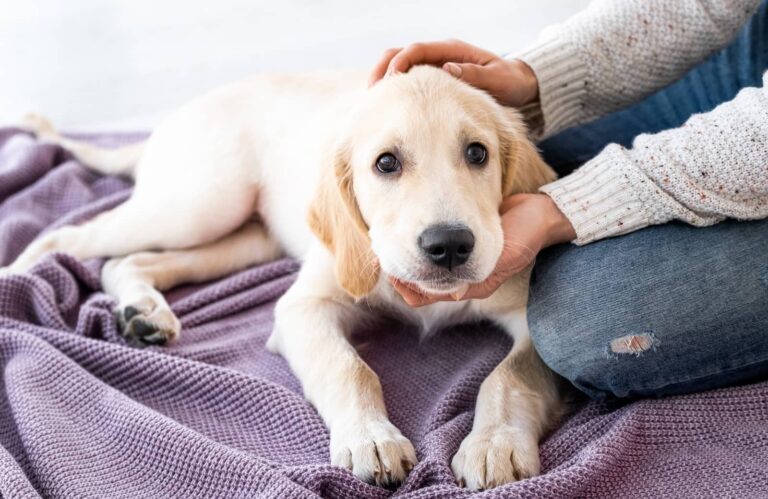
A dog with blood in their stool who is otherwise bright, eating and behaving normally usually has a problem in the colon, and colitis is the most common one. That's the reassuring version. Two details change the answer, and they're the two I ask about first on the phone: whether the blood is fresh red or black and tarry, and whether your dog is an unvaccinated puppy.
Key Takeaways
Four situations where "acting normal" doesn't buy you time. Black tarry stool. Diarrhea that looks like raspberry jam in a small or toy breed dog. Any unvaccinated or partly vaccinated puppy. And any dog who has had human ibuprofen, naproxen or aspirin, whether you gave it or they found it. In those four, call us at (519) 896-0532 or use our emergency page after hours rather than watching overnight.
Usually not an emergency tonight. Usually still worth an exam this week.
A dog who is playing, eating, drinking and greeting you at the door is telling you something real. Dogs with colitis, which is the most common reason for fresh blood in an otherwise well dog, typically have a normal physical exam and don't lose weight or vomit.2 That's the same picture you're describing.
What their behaviour can't tell you is the cause. Whipworm, a food change, stress, a rectal polyp and early inflammatory bowel disease all look identical from the outside. So the mood is reassuring about the urgency and tells you nothing about the diagnosis.
Their demeanour decides whether this is tonight or Thursday. The colour of the blood and their vaccination status decide whether that rule applies at all.
Look at the colour before anything else. It localises the bleeding better than any other clue you have at home.
Fresh red blood, called hematochezia, hasn't been digested. It came from low down, near the exit. Black tarry stool, called melena, has been through the stomach and small intestine, and that digestion is what turns it black.1
| What you're seeing | Small intestine problem | Large intestine problem |
|---|---|---|
| Blood in the stool | Dark black (melena) | Red (fresh) |
| How often they go | Normal or slightly increased | Very frequent |
| Amount each time | Normal to increased | Decreased |
| Urgency to get outside | Absent | Usually present |
| Straining | Absent | Usually present |
| Mucus, the jelly-like coating | Usually absent | Frequent |
| Weight loss | May be present | Rare |
The right-hand column is the one that fits a dog who seems fine. Small volume, frequent trips, urgency, straining, mucus, red streaks, normal weight. That's colitis, and it's the pattern I see most.12
The left-hand column deserves more concern. Melena means blood has been sitting in the upper gut long enough to be digested, and by the time it's visible there's usually been a fair volume of it. Stomach ulcers are a common source, and NSAIDs are among the most frequently reported causes of ulceration in dogs.8 Black stool gets a same-day appointment even in a dog who is bouncing around the house.
Blood streaked on the outside of an otherwise normal formed stool is a different picture again. That points at the rectum or anus rather than the gut. Rectal polyps cause hematochezia and straining, and in dogs they can turn into carcinoma over time.13 Anal sac disease does the same thing. Both need a rectal exam, not a diet change.
There are three reasons, and the usual folk answer, that dogs are stoic, isn't really one of them.
Most of it comes down to where the damage sits. Nutrients get absorbed in the small intestine, higher up than the colon, so a dog with an inflamed colon carries on absorbing their food normally. What you see instead is urgency, straining, mucus and blood. That's why weight loss and vomiting are uncommon in colitis, and why the physical exam usually comes back unremarkable.2
Parasites are the second reason, and they often cause no illness at all. Many canine whipworm infections are asymptomatic or subclinical, and dogs of any age can carry them without showing signs while still passing diarrhea streaked with mucus and fresh blood.3 Hookworm behaves the same way. In a study of 30 naturally infected adult dogs, 43.3% had hematochezia, but the laboratory changes were mild in most of them.12 Giardia belongs on the same list.
The third is that some bleeding is genuinely silent. Merck's entry on gastrointestinal ulcers says plainly that some dogs and cats with ulceration show no clinical signs at all.8 Absence of symptoms isn't evidence that nothing is wrong.
So a happy dog isn't a false reading. It's a real and accurate signal about how sick they are right now, and a poor signal about what's causing it.
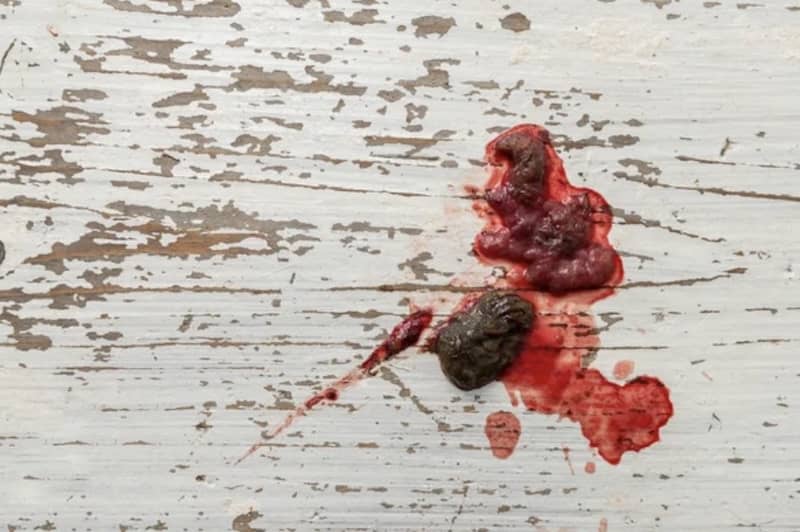
Colitis is far and away the most common, including stress colitis. Small frequent stools, urgency, straining, mucus, fresh blood, normal appetite. In most cases the trigger is never identified.2 Boarding, a move, a new baby, a thunderstorm week or a house guest are all common enough that I ask about the last fortnight before I ask about anything else.
Whipworm and hookworm come next. Both are among the most commonly diagnosed intestinal parasites in dogs, and both cause bloody stool in animals who look well.34 Whipworm has a prepatent period of 74 to 90 days, so a dog can be showing signs well before there are any eggs in the stool to find.3
Then there's the obvious one, a diet change or something they ate. Rich food, a new bag opened without a transition, something out of the compost. That's the usual explanation for a single episode that clears up on its own.
Acute hemorrhagic diarrhea syndrome, the condition that used to be called HGE, is less common but moves faster. Yorkshire Terriers, Miniature Pinschers, Miniature Schnauzers, Miniature Poodles and Maltese are overrepresented, median age around 5 years, and the diarrhea is often described as looking like raspberry jam.6 These dogs dehydrate quickly. The blood concentrates, often above a PCV of 60%, and what they need is intravenous fluids rather than a few days of chicken and rice.6 With hospital treatment, mortality is under 10%.6
Parvovirus is the one I most want ruled out in a young dog. Unvaccinated or incompletely vaccinated dogs between 6 weeks and 6 months are the most susceptible. Signs start 5 to 7 days after exposure with lethargy and a poor appetite, then progress within 24 to 48 hours to vomiting and hemorrhagic diarrhea.5 Those early hours are exactly when a puppy still looks passable. With supportive care, 70% to 90% survive, and over 90% of hospitalised puppies do, but that number depends on going in early.5 The core puppy series runs at 6 to 8, 10 to 12 and 14 to 16 weeks, with a booster a year later.5
Human anti-inflammatories cause ulcers in dogs readily, and ibuprofen, naproxen and aspirin are all on that list. NSAID administration is one of the most commonly reported causes of gastroduodenal ulceration, and giving an NSAID alongside a steroid is contraindicated.8
Chronic inflammatory bowel disease and tumours are less common again. They're the reason a dog whose blood keeps coming back gets a proper workup rather than another round of the same diet.
The colour of the stool and your dog's age do most of the work here.
Bring a stool sample from that day if you can. It saves a visit more often than not.
Expect a physical exam including a rectal. That's how polyps, anal sac disease and masses near the exit get found, and none of them show up on a fecal test.13
The fecal test itself has to be done properly. Flotation with centrifugation is the method that matters, because whipworm eggs are dense and standard flotation misses them.3 Eggs are also shed intermittently, so one negative result on a dog with a suggestive history doesn't close the question. CAPC recommends testing dogs four times in their first year and at least twice a year as adults.4
Bloodwork usually follows. A packed cell volume tells me whether they've lost meaningful blood or, in the case of AHDS, whether they're concentrating.6 A full count and chemistry panel picks up infection, protein loss and organ disease going on behind the scenes.
Ultrasound and radiographs I'd reserve for the dog with weight loss, repeated episodes, a mass on palpation, or a history that suggests they've swallowed something. I wouldn't reach for imaging on a first episode in a well dog.
For a bright dog with one episode of fresh blood and no other signs, a few days of supportive feeding is reasonable while you get an appointment booked.
Feed bland. Boiled chicken or lean beef with white rice, small portions, several times a day, for two or three days, then a gradual return to their usual food.
Add fibre, because that's the part with real evidence behind it. Fibre decreases free fecal water and slows transit so the colon has more chance to absorb it.2 In 22 police working dogs with chronic large-bowel diarrhea given psyllium husk for a month, response was rated very good in 50% and good in 40%, with only 10% poor.11 Canned pumpkin is the easier version of the same idea, and plain psyllium works if your dog will take it.
Probiotics are worth a try, with honest expectations. One randomised placebo-controlled trial of 148 dogs found a probiotic paste shortened acute diarrhea from a median of 47 hours to 32 hours.9 A separate trial of 60 dogs comparing a probiotic, metronidazole and placebo found no statistically meaningful difference between any of them.10 So they're low risk and may shave a day off. They won't treat whatever is causing the bleeding.
What surprises people is that antibiotics don't belong here. The 2024 ENOVAT guidelines give a strong recommendation against antimicrobials in dogs with mild acute diarrhea, at high certainty evidence, and that holds whether or not there's blood in the stool.7 Merck says the same about mild to moderate AHDS.6 Antibiotics are for the dog who is systemically ill or septic, not for the sight of blood.
Nothing from your own medicine cabinet. No Imodium, no Pepto-Bismol, which contains salicylate, and no human anti-inflammatories.8
Check the colour first. Black or tarry, call today. Fresh red in a dog who's otherwise themselves, book for this week.
If your dog is a puppy who isn't through their vaccine series, don't run the wait-and-see plan at all. Go in.
Otherwise, collect a stool sample, take a photo of what you saw, feed bland for a couple of days, and write down when it happens and what was going on beforehand. Boarding, a new bag of food, a stressful week. That history is often what gives me the answer.
Then get the fecal done properly. Most of these dogs have something ordinary and treatable, and the ones that don't are much easier to catch early than late.
You can book online or call us at (519) 896-0532.
Yes, but for most dogs it's a booking this week rather than a trip tonight. A bright, eating, playful dog with fresh red blood usually has colitis, and with colitis the physical exam is typically unremarkable and dogs don't lose weight or vomit. Their behaviour is an accurate read on how sick they are right now and tells you nothing about the cause. Whipworm, a food change, stress and a rectal polyp all look identical from the outside, so the exam and a stool sample are what separate them.
Bright red blood hasn't been digested, so it came from low down in the large intestine, colon or rectum. Black tarry stool means the blood passed through the stomach and small intestine and was digested on the way, which puts the bleeding higher up. Red blood in a well dog is the common and usually straightforward version. Black tarry stool gets a same-day appointment even if your dog seems perfectly fine, because by the time it's visible there has usually been a fair volume of bleeding.
A few days is reasonable for a bright dog with fresh red blood and no other signs. Feed bland, collect a stool sample, and book. Don't run a wait-and-see plan at all if the stool is black, if your dog is a puppy who isn't through their vaccine series, if a small breed dog has heavy watery bloody diarrhea with vomiting, or if anything else has changed such as lethargy, appetite loss, pale gums or a painful belly.
Yes, and it's one of the more common explanations I see. Stress colitis inflames the colon and produces exactly the picture owners describe: small frequent stools, urgency, straining, mucus and streaks of fresh blood in a dog who is otherwise bright and eating. Boarding, a move, a new baby, a house guest or a week of thunderstorms are all typical triggers. It usually settles with a bland diet and added fibre, but a stool test still matters because parasites cause the same picture.
Usually not, and this surprises people. The 2024 international ENOVAT guidelines give a strong recommendation against antibiotics in dogs with mild acute diarrhea at high certainty evidence, and that holds whether or not there's blood in the stool. Antibiotics are for dogs who are systemically ill or septic, not for the sight of blood. Added fibre has better evidence behind it for this, and probiotics may shorten an episode by a day or so.
Very different, and it's the one situation where I'd stop watching immediately. Unvaccinated or partly vaccinated dogs between 6 weeks and 6 months are the most susceptible to parvovirus. Signs start with lethargy and a poor appetite around 5 to 7 days after exposure, then progress to vomiting and hemorrhagic diarrhea within 24 to 48 hours, so the early window is exactly when a puppy still looks passable. With supportive care 70% to 90% survive, and over 90% of hospitalised puppies do, but that depends on going in early.
Sources


