Hospital Hours: Monday-Friday: 8am-6pm | Saturday: 8am-4pm
(519) 896-0532

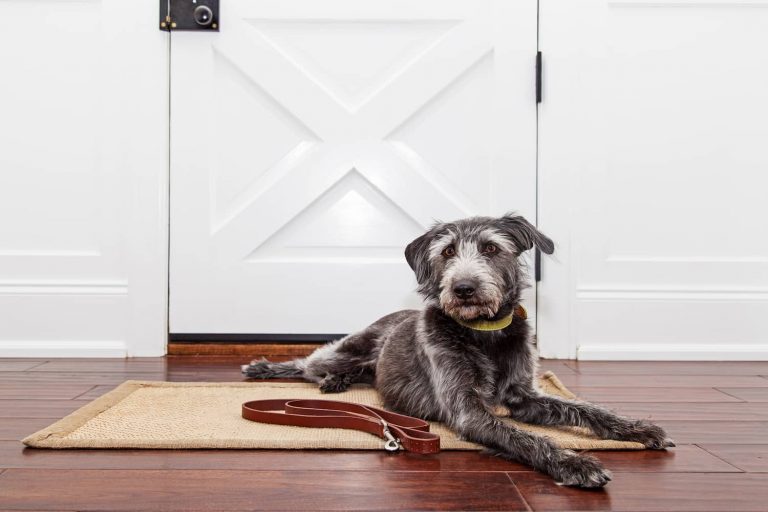
An elbow callus is a patch of thickened, hairless, greyish skin over the point of the elbow, and in most dogs it's a normal response to pressure rather than a problem that needs fixing. I see them daily in practice, and very few of them are infected.
The ones worth acting on are the ones that crack, turn sore, or show up quickly in a dog who never had them before.
Key Takeaways
It's a thickened, hairless plaque of skin sitting directly over the bony point of the elbow. The colour is usually grey, the surface is firm, and the hair over it is gone.
Skin does this on purpose. Repeated pressure against a hard surface makes the outer layer build up, in the same way a guitarist's fingertips toughen. The elbow takes the load every time a dog lies down, which is why it's the most common site.


Elbows and hocks are listed among the sites most prone to skin infection precisely because of that chronic pressure.2 The callus itself isn't the infection. It just makes one easier to get.
Pressure and repetition, most of the time. A dog who sleeps on tile, hardwood, concrete or a thin mat is loading the same two points of bone against an unforgiving surface for hours a day.
But they don't always need a reason. Calluses can develop spontaneously in a dog with perfectly good bedding, and I'd rather owners hear that than spend a year blaming their floors.
Where bedding does matter is in how fast a callus progresses. Mobility problems aggravate them, because a dog who is sore, stiff or slow to rise spends more time down and gets up less often. The elbow spends longer under load, so the callus builds faster.
Breed plays a part too. The classic lists name the giant breeds, and Merck's hygroma entry points to Irish Wolfhounds, German Shepherds, Great Danes, Mastiffs, Newfoundlands and Saint Bernards.3 My own caseload looks different. It's Labradors and golden retrievers I see this in most, along with other large breeds. Any dog with enough body weight over a bony elbow can develop one.
Three different things turn up at the same spot, and they're managed differently.
| Callus | Hygroma | Infected callus | |
|---|---|---|---|
| What it is | Thickened surface skin | Fluid-filled sac under the skin3 | Bacterial infection in a cracked callus1 |
| How it feels | Firm and hard | Soft and squishy3 | Warm and tender |
| Hair over it | Gone | Usually present3 | Gone, often crusted |
| Typical dog | Large breeds, any age | 6 to 18 months, or older dogs with elbow arthritis3 | A long-standing, cracked callus |
| What to do | Cushion it, usually nothing else | Have it confirmed by a vet | Needs treatment |
The practical difference is what your fingers tell you. A callus feels like hard skin. A hygroma feels like a water balloon under normal, haired skin, because it's a fluid-filled sac that forms when repeated trauma walls off a pocket of serous fluid.3
Book an appointment if the callus is red, swollen, warm, painful, crusting, oozing, bleeding, or draining. Those are the signs of infection at a pressure point.4 Fever or a limp on that leg means it needs to be seen promptly, not at your convenience. Call us at (519) 896-0532.
Licking is worth paying attention to. A dog who won't leave the elbow alone is usually telling you it's uncomfortable, and persistent licking at one spot can create its own problem in the form of a lick granuloma.
The other reason to come in has nothing to do with the skin. When a callus appears quickly, or an existing one thickens noticeably over a short stretch, I start with a detailed orthopedic exam. A dog doesn't suddenly start lying down more for no reason, and the callus is often the visible end of an arthritis or lameness problem that hasn't been picked up yet.
Treating that skin without asking why it changed misses the actual diagnosis.
Treatment depends on which of three states the callus is in.
If there's no infection and no discomfort, leave it alone. A dry, intact, painless callus needs cushioning and nothing more. There's no benefit to treating healthy thickened skin, and plenty of ways to irritate it.
Once a callus is dry and cracking but still not infected, the aim is to soften the surface and take the pressure off so the fissures can close. A bland emollient and better bedding handle most of these. Keep an eye on the cracks, because that's the stage where infection becomes possible.
An infected callus is where this stops being a cosmetic issue. Infected calluses are classified as callus pyoderma, and the 2025 ISCAID guidelines place that under deep pyoderma rather than a surface problem.1 That classification changes the treatment.
For deep pyoderma, culture and susceptibility testing is always strongly recommended before systemic antibiotics, and systemic therapy with adjunctive topical treatment runs for about three weeks initially, followed by a re-examination to check progress and deal with the underlying cause.1 Cytology at the same site confirms bacteria are actually there before anyone reaches for a drug.2
If you've read older advice about continuing antibiotics for a fixed week past the point where things look healed, that guidance has moved on. The current approach is a defined course followed by a recheck, which is a better use of antibiotics and a better check on whether the primary cause was ever addressed.1
Topical therapy does more here than most owners expect. Chlorhexidine at 2 to 4 percent and benzoyl peroxide at 2.5 to 3 percent are the standard antibacterial options, with medicated bathing two to three times a week and a contact time of 10 to 15 minutes each time.2 Contact time is the step most people skip. Ten to fifteen minutes means leaving the product on, not rinsing it straight off. For more on how these infections behave, see our guide to pyoderma in dogs.
Surgery is a last resort and I'd steer away from it in almost every case. The elbow is under load every single time the dog lies down, so a surgical site there is being stressed constantly while it's trying to heal. Merck notes the same difficulty with hygroma excision at this site, where the rate of complications including dehiscence of the repair is high.3
Most of the damage I see at this site is well-intentioned.
Reduce the pressure. That's the whole strategy.
It does not have to be an orthopedic bed. Anything with a bit of give underneath will work, whether that's a foam mat, a folded duvet, a thick blanket over the spot your dog actually chooses, or a proper bed. Owners sometimes assume this requires an expensive purchase, and it doesn't.
The catch is that the bedding has to be where the dog lies, not where you'd like the dog to lie. A dog who ignores a new bed in the corner and keeps sleeping by the back door needs padding by the back door.
Outdoor dogs need the same thinking. Concrete and asphalt are harder than anything indoors, so a shaded grassy spot or a raised cot gives the elbows a break.
Elbow pads exist for dogs already prone to calluses, and they're worth trying in persistent cases. They should be soft and snug without being tight enough to restrict circulation.
Weight counts too. A heavier dog puts more force through the same small point of bone, so keeping your dog lean does more for their elbows than any topical will.
If your dog's elbow callus is cracking, sore, or growing faster than it used to, or you're not sure whether you're looking at a callus or something else, give us a call at (519) 896-0532. Dogs with pressure-related skin problems elsewhere on the limb may also be dealing with pododermatitis or foot pad corns.
An intact elbow callus isn't painful. It's thickened skin doing a protective job, and most dogs are completely unbothered by it. Pain enters the picture when the callus cracks and becomes infected, and then it can be very sore. Signs to watch for are redness, swelling, warmth, crusting, discharge, or your dog licking and chewing at the elbow. A limp on that leg, or a callus that's hot to the touch, should be seen promptly rather than monitored at home.
Crusty elbows are usually a thickened, dried-out callus. The skin over the pressure point builds up, loses its flexibility, and the surface starts to flake and fissure. That said, crusting combined with redness, odour, or any discharge points toward infection rather than a simple dry callus, and that needs to be examined. It's also worth resisting the urge to pick at the crust, because removing that layer leaves raw skin at a spot that goes straight back under pressure.
Not usually, and that's fine. Once the skin has thickened it tends to stay thickened, and an intact callus doesn't need to disappear to be healthy. What you can change is the direction it's heading. Take the pressure off with soft bedding and a callus generally stops progressing, softens somewhat, and stops cracking. If the underlying pressure never changes, it keeps building. The goal is a stable, supple callus rather than no callus at all.
A bland moisturiser is reasonable for a dry, intact callus, and keeping the surface supple helps stop it cracking. What to avoid is anything drying or irritating. Vinegar, hydrogen peroxide and similar home antiseptics dry the callus out, and a dried callus cracks. Those cracks are what let bacteria in, so a well-meaning home remedy is one of the more common reasons a simple callus turns into an infected one. If the skin is already broken, red, or discharging, skip the home treatment and have it examined instead.
Feel it. A callus is hard, flat to slightly raised thickened skin with the hair worn away. A hygroma feels soft and squishy, like a small water balloon under the skin, and the hair over it is usually still there. A hygroma is a fluid-filled fibrous sac that forms under the skin from repeated trauma, so it's a different problem with different management. Hygromas often show up in young large-breed dogs between six and eighteen months, or in older dogs with elbow arthritis. If you're unsure which one you're feeling, that's a straightforward thing for your vet to confirm on a physical exam.
Sources


