Hospital Hours: Monday-Friday: 8am-6pm | Saturday: 8am-4pm
(519) 896-0532

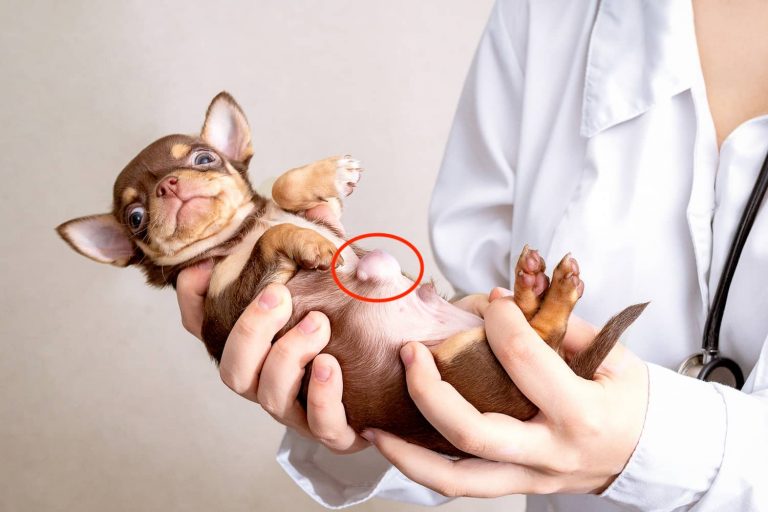
If you're a new puppy owner, you may be wondering what an umbilical hernia is. An umbilical hernia in puppies is fairly common and usually doesn't require treatment. However, there are two types of umbilical hernias: reducible and non-reducible. This article will discuss both types of umbilical hernias in puppies and when you should be concerned.
An umbilical hernia in puppies is a hole in the abdominal wall near the umbilicus (belly button). The umbilical cord attaches the puppy to the mother during pregnancy and usually closes soon after birth. However, sometimes the umbilical cord doesn't close properly and this can result in an umbilical hernia.
There are two types of umbilical hernias: reducible and non-reducible. Reducible umbilical hernias can be pushed back in and may be considered dangerous depending on the size. Non-reducible umbilical hernias, on the other hand, cannot be pushed back in and often do not require any treatment.
A reducible umbilical hernia is a permanent opening from the abdomen. They can be pushed back through the opening of the abdominal wall. Reducible umbilical hernias often require treatment as there is the potential for the intestines or other abdominal organs such as the urinary bladder to become strangulated if the opening is large.
A non-reducible umbilical hernia is when there is no opening of the abdominal wall but there is a protrusion of a small amount of fat through the umbilicus. Non-reducible umbilical hernias often do not require any treatment.
Umbilical hernias in puppies are an inherited, genetic trait. This means that if your puppy's parents had umbilical hernias, there is a greater chance that your puppy will also have an umbilical hernia.
The treatment for an umbilical hernia in puppies will vary depending on the type of umbilical hernia. Reducible umbilical hernias often require surgery to close the opening in the abdominal wall. Non-reducible umbilical hernias, on the other hand, do not usually require any treatment but puppy owners may elect to correct the hernia for cosmetic reasons.
The best opportunity to surgically correct an umbilical hernia, provided there is no emergency, is at the time of the puppy's spay or neuter surgery. This ensures that your veterinarian is already performing surgery and anesthesia on your puppy.
If you notice that your puppy has an umbilical hernia, you should take them to the vet for an examination. Your vet will be able to determine whether or not your puppy's umbilical hernia is reducible or non-reducible and whether or not treatment is necessary. If your puppy has a large reducible umbilical hernia, it may be at risk for strangulation of the intestines or other abdominal organs. In this case, emergency surgery may be necessary.
Overall, umbilical hernias in puppies are fairly common and usually aren't a cause for concern. However, it's important to take your puppy to your vet for an examination so that you can determine whether or not treatment is necessary.
In conclusion, umbilical hernias in puppies can either be reducible or non-reducible. Reducible umbilical hernias often require surgery to close the opening in the abdominal wall while non-reducible umbilical hernias do not usually require any treatment. If you think your puppy may have an umbilical hernia, it's best to take them to your veterinarian for an examination. Your veterinarian will be able to determine whether or not your puppy's umbilical hernia is reducible or non-reducible and whether or not treatment is necessary.


