Hospital Hours: Monday-Friday: 8am-6pm | Saturday: 8am-4pm
(519) 896-0532

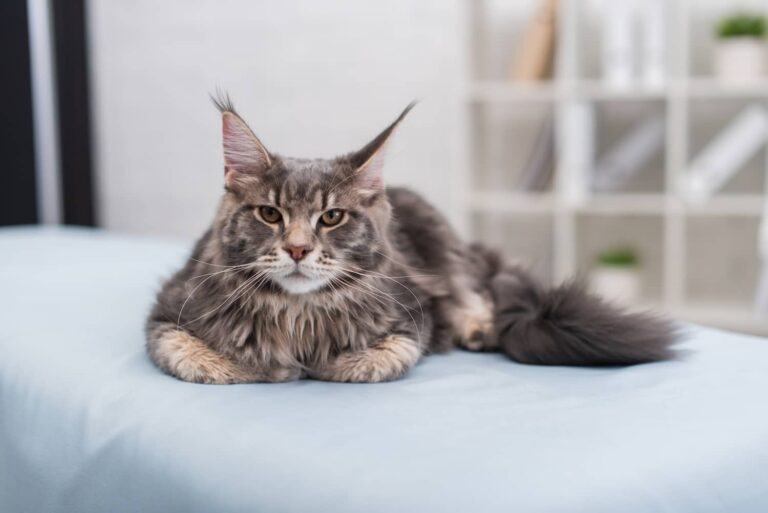
Have you seen a cat that looks like there are extra toes?! There's a good chance they actually do, and we call this polydactyly. This is an inherited, genetic trait where they have up to 7 toes on each paw.
The term "polydactyl" is derived from the Greek words "poly," meaning many, and "dactyls," meaning fingers or toes. It is used to describe animals that have extra digits on their paws.
Normally, cats have 18 toes: 5 on each of their front paws and 4 on each of their hind paws. This is something they are born with, not something they develop with time.
Extra toes on the hind paws are much more uncommon compared to the front paws, but they can occur.

The extra digit or toe can appear on either the inside or outside of the extremities. Sometimes, the additional toe doesn't have a complete set of bones.
Interestingly, polydactyl cats are also called "Hemingway Cats" or "Mitten Cats". Ernest Hemingway loved polydactyl cats, and the term "Mitten Cats" is a nickname, as the paws resemble a mitten.
Polydactyly is an inherited genetic trait in cats that comes from the cat's parents. We see it more commonly in Maine Coons, Pixie Bobs, and American Shorthairs.
They sure are! The only issue we see with the extra toes is that they tend to curl as they grow, and they will quickly grow into the pads, much faster than the "normal" nails. Frequent nail trims are a must!
If you notice that your cat has an ingrown nail, please contact your veterinarian, as they can remove the ingrown nail safely and properly. In many instances, ingrown nails develop secondary infections, so antibiotics are often used to treat and prevent infection.


