Hospital Hours: Monday-Friday: 8am-6pm | Saturday: 8am-4pm
(519) 896-0532


Chronic bronchitis is one of the most common chronic respiratory conditions diagnosed in dogs. If your dog has been coughing for more than two months, it is important to take him to the veterinarian for a check-up. Chronic bronchitis in dogs is a serious respiratory condition that can lead to irreversible changes in the airways. In this article, we will discuss the warning signs of chronic bronchitis in dogs and what you can do to help your pup feel better.
Chronic bronchitis in dogs is an inflammatory respiratory condition characterized by a cough that persists for over two months. This chronic inflammatory condition is associated with irreversible changes in the airways with thickening and narrowing of the airways, as well as excessive mucous secretion. Chronic bronchitis is one of the most common chronic respiratory conditions diagnosed in dogs.
The exact cause of chronic bronchitis in dogs is not known. Possible causes include:
The offending cause will cause chronic inflammation of the airways and surrounding tissues leading to an increase in the size and number of goblet cells, which produce mucus. This excessive mucus production, combined with airway smooth muscle hypertrophy (enlargement), impaired ciliary motility, and fibrosis of supportive connective tissue results in small airway obstruction. The bronchial lining and submucosal layers become infiltrated by various inflammatory cells, resulting in edema. In some cases, the bronchial smooth muscle may also begin to spasm.
Due to excessive mucus production, airway edema, and airway narrowing caused by cellular infiltrates, the airflow in the bronchial tree becomes restricted over time resulting in chronic obstructive pulmonary disease in dogs (COPD). Dogs with chronic bronchitis are also at increased risk for respiratory infections.
Chronic cough is the most commonly seen clinical sign in dogs with chronic bronchitis, and in some cases, it may be the only sign noted. Infection, stress, exposure to inhaled irritants, or excitement may all exacerbate the clinical signs.
Generally, dogs with chronic bronchitis may exhibit a variety of symptoms, including:
These signs may worsen over time as the bronchial tree becomes more obstructed. In some cases, dogs with chronic bronchitis may also develop respiratory distress.
If your dog has been coughing for more than two months, it is important to take him to the veterinarian for a check-up. A thorough physical examination and medical history are essential in the initial evaluation of your dog. Chronic bronchitis in dogs is a diagnosis of exclusion which means other conditions that may cause a cough must be ruled out before a diagnosis of bronchitis can be made.
It is important for your veterinarian to perform a thorough physical examination and obtain a detailed clinical history. Thoracic auscultation may reveal wheezes, crackles, and increased bronchovesicular sounds; however, some dogs have normal auscultation. The expiratory phase may be prolonged with increased expiratory effort.
Chest x-rays (radiographs) should be performed to rule out other causes of cough. In the early stages of chronic bronchitis, however, thoracic radiographs may be normal. In one report, up to 40% of patients with chronic bronchitis had normal radiographs.
Management of chronic bronchitis in dogs should aim to slow the progression of respiratory changes, control clinical signs, and manage inflammation. It is also important to address any contributing factors or causes that may be involved such as obesity, tracheal collapse, etc.
Your veterinarian will likely recommend any combination of the following treatments to help you manage chronic bronchitis in your dog:
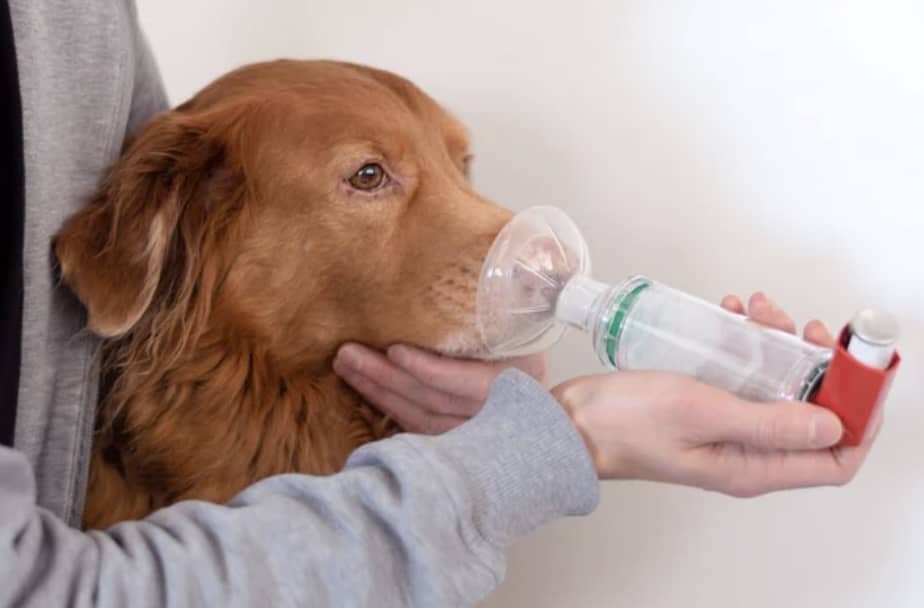
To minimize the chances of exacerbating chronic bronchitis in dogs, it is helpful to take some environmental precautions such as reducing exposure to allergens and irritants or increasing airway humidification. In addition, avoiding excitement or stress can also help to reduce acute episodes.
Additionally, a diet that helps to reduce obesity is good for dogs who suffer from chronic bronchitis. Obesity decreases thoracic wall compliance and increases abdominal pressure on the diaphragm. This can lead to difficulty breathing and an increased risk of respiratory problems.
The prognosis for dogs with chronic bronchitis is fair. The disease is not curable, but the signs can be managed in some cases. Some dogs may only have mild intermittent coughing while others may develop life-threatening respiratory failure. Although remission can be difficult to achieve, some patients may experience long periods of clinical stability with proper treatment.
Chronic bronchitis in dogs is a respiratory condition that is characterized by a cough that persists for more than two months. This chronic inflammatory condition is associated with irreversible changes in the airways and can be difficult to manage. Subtle warning signs of chronic bronchitis in dogs include a soft, wet cough that may be worse in the morning or after exercise, increased respiratory effort or wheezing. If you think your dog may have bronchitis, it is important to take them to see a veterinarian for proper diagnosis and treatment.


