Hospital Hours: Monday-Friday: 8am-6pm | Saturday: 8am-4pm
(519) 896-0532

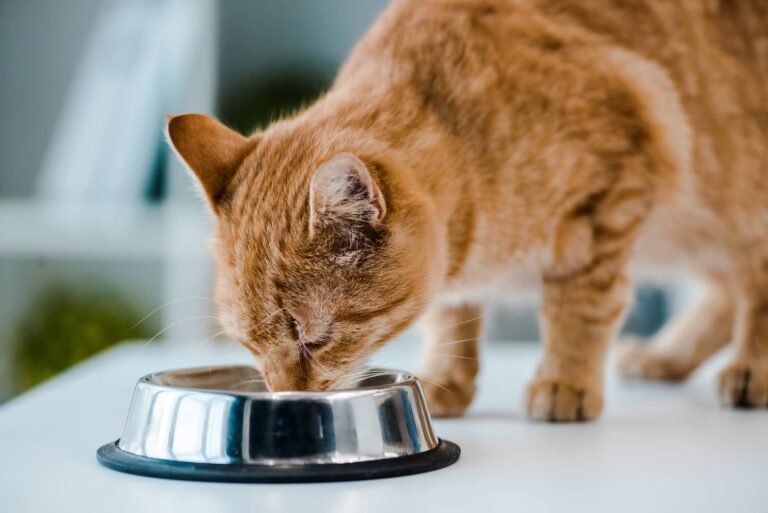
The quickest way to get a cat eating again is to find out why they stopped. A healthy but fussy cat usually responds to warm, strong smelling food and a quiet place to eat. A cat who has gone off food because they feel unwell needs that illness treated, and often a prescription appetite stimulant to keep them eating in the meantime.
Don't wait long, though. A cat who stops eating is at risk of fatty liver disease,1 and specialist guidelines say nutritional support should start no later than 3 days after a cat stops eating.2
Key Takeaways
Call us today if your cat has eaten nothing for 24 hours, or has been eating much less than normal for 2 to 3 days. Call sooner if they're also vomiting, hiding, drooling, lethargic or have yellow gums, and don't wait at all with a kitten. Call (519) 896-0532 or see our emergency information.
When a cat who used to eat well goes off their food, I look for illness, pain or stress before I put it down to fussiness.
Nausea is easy to miss, because plenty of nauseous cats never vomit. They walk up to the bowl, sniff it and walk away. The ISFM guidelines point out that a poor appetite can be the only sign of nausea.2
The common causes I look for:
A poor appetite that comes with vomiting, weight loss, hiding, or a change in drinking or litter box habits points to illness rather than fussiness. That's a cat I'd want to see soon.
Not long. The 2022 ISFM consensus guidelines say nutritional support should start no later than 3 days after a cat stops eating.2 That's why the line I give owners is 24 hours of eating nothing, or 2 to 3 days of eating much less than usual. Call at that point, not on day 3.
The danger is hepatic lipidosis, or fatty liver disease. When a cat stops eating, the body moves fat out of storage to make up the shortfall. It arrives in the liver faster than the liver can deal with it, builds up inside the liver cells and stops them working.7
Overweight cats are at much higher risk, but it can happen to a cat who looked healthy the week before.7 In more than 90% of cases, another illness put the cat off food in the first place.7 So the cause and the eating both need attention at the same time.
Affected cats tend to hide, and many develop a yellow tinge to the gums and the skin inside the ears.7 That yellowing is jaundice, and fatty liver is one of the common causes of jaundice in cats.
Treatment is food, which usually means a feeding tube, often for a month or so at home.7 Appetite stimulants alone won't recover a cat with severe fatty liver disease.1 Cats who get through an episode rarely relapse.7
Dehydration makes all of this worse. Cats get a good share of their daily water from food, especially wet food, so a cat who isn't eating is also missing a lot of their water. Dehydration then dulls the appetite further, and the cycle speeds up.
For a cat who is healthy but fussy, or recovering and starting to pick at food again, these are what I'd try first. Most of them work by making food smell stronger or making eating feel safer.
Cats can link a food to how they felt when they ate it. A cat who was nauseous, stressed or force-fed while eating a particular food may refuse it afterward. This is called food aversion.2
It's why I'll often suggest a different food at home if your cat ate a particular canned food while in hospital. It sounds backwards. But that smell can remind your cat of the hospital, and at home we want food to feel new and appealing, not tied to a cage and a drip line.
The same logic applies to prescription diets. Hospitalized cats who are force-fed or syringe-fed commonly develop an aversion to that food, so the ISFM guidelines say a diet meant for the long term shouldn't be introduced in hospital.2 If your cat has kidney disease and needs a renal diet, I'd wait until they're eating well before switching, and make the change gradually.
There are two prescription appetite stimulants made for cats: mirtazapine and capromorelin. Mirtazapine comes as an ear ointment called Mirataz, or as a tablet. Capromorelin is an oral liquid called Elura, and it went on the Canadian market in July 2026.5
They keep a cat eating while the cause gets treated. They don't find the cause, and the ISFM guidelines say they shouldn't stand in for a diagnostic work-up.2
| At a glance | Mirtazapine (Mirataz, tablets) | Capromorelin (Elura) |
|---|---|---|
| How it works | Acts on brain chemicals that control appetite, and also eases nausea6 | Mimics ghrelin, the hormone that signals hunger8 |
| How it's given | Ointment on the inside of the ear, or a small tablet | Liquid by syringe into the mouth |
| Usual dose | Ointment: a 1.5-inch ribbon (about 2 mg) once daily for 14 days.9 Tablet: about 2 mg once daily, or every 48 hours with kidney or liver disease2 | 2 mg/kg once daily, with food offered 30 minutes later10 |
| Approved for | Weight gain in cats with a history of weight loss9 | Weight loss in cats with chronic kidney disease10 |
| Common side effects | Extra vocalizing, hyperactivity, vomiting, redness at the application site9 | Vomiting and drooling10 |
| Use with caution | Liver or kidney disease. Never with an MAOI drug such as selegiline9,11 | Diabetes, heart disease, severe dehydration, liver disease. Not for cats with acromegaly10 |
Mirtazapine has good evidence behind it. In a placebo controlled trial in cats with kidney disease, 1.88 mg given every other day for three weeks increased appetite and activity, cut down vomiting and put weight on. Cats gained a median of 0.18 kg on mirtazapine and lost a little on placebo.6 The anti-nausea effect is a big part of why it suits kidney cats so well.
The ear ointment, Mirataz, saves you pilling a cat who already doesn't want anything in their mouth. You rub a 1.5-inch ribbon onto the inside of the ear flap once a day for 14 days. In the approval study, cats on it gained 3.9% of their body weight in two weeks, against 0.4% on placebo.9 Wear gloves when you apply it, and keep people and other pets from touching your cat for 2 hours afterward.9
Tablets are dosed at about 2 mg per cat once a day, or every 48 hours for a cat with kidney or liver disease, since those organs are how the drug gets cleared.2 The 1.88 mg dose you'll see in studies is one eighth of a 15 mg human tablet, which tells you how much stronger the human pills are. In a review of 84 cats reported to the ASPCA Animal Poison Control Center, 70% of cases were accidental, and the most common dose involved was a whole 15 mg tablet.12 If you take mirtazapine yourself, keep it well apart from your cat's medication.
In the Mirataz field study, about 1 cat in 9 vocalized more than usual and about 1 in 9 vomited.9 Those problems climb with the dose. The ASPCA review found fewer side effects at 1.88 mg than at 3.75 mg, and suggested the lower dose as the better starting point.12 If your cat is yowling or pacing on mirtazapine, call us, because the dose can often be adjusted.
Mirtazapine must never be given with, or within 14 days of, an MAOI drug such as selegiline, because of the risk of serotonin syndrome.9,11 If your cat takes a behaviour medication like fluoxetine or amitriptyline, tell us before starting it.
When the course ends, keep an eye on the food bowl. The label advises calling your vet if your cat's food intake drops by more than three quarters for several days, or stops for more than 48 hours.9
Capromorelin mimics ghrelin, the hormone that tells the brain the body is hungry.8 Elura is the version made for cats. It was approved in the United States in 2020 as the first drug specifically for weight loss in cats with chronic kidney disease,8 and Health Canada lists it as marketed here since July 2026.5
You may have heard of Entyce, which is the same drug made for dogs. Now that a cat product is available in Canada, I'd use Elura rather than the dog version.
It's a liquid given by mouth once a day at 2 mg/kg, and the label says to offer food 30 minutes after the dose.10 In the field study, cats on Elura had gained 5.2% of their body weight by day 55, while cats on placebo had lost 1.6%.10
Vomiting and drooling are the side effects to expect. In that study, 30% of cats on Elura vomited, compared with 22% on placebo, and 21% drooled, compared with none.10 It can also lower heart rate and blood pressure for up to 4 hours after a dose, and raise blood sugar for several hours.10
The label rules it out for cats with acromegaly, advises caution with heart disease, severe dehydration or liver disease, and notes it hasn't been tested in diabetic cats.10 A dehydrated cat who has just stopped eating needs fluids before this is a good choice.
If nausea might be the problem, the ISFM guidelines support a trial of anti-nausea medication, such as maropitant (Cerenia) or ondansetron, alongside treating the cause.2
Pain works the same way. Good pain control improves how much a cat will eat on their own,2 so drugs like buprenorphine or gabapentin are part of getting a sore cat eating again.
Cyproheptadine, an older antihistamine, also stimulates appetite and still appears in the guidelines as an option.2
Then the appetite stimulant isn't the answer, and it's time to look harder at why. A stimulant can nudge a cat who is partly eating. It can't fix the illness underneath, and it isn't meant to.2
The first step is a recheck. I'd look again for nausea or pain that's been missed, including in the mouth, and ask whether the original diagnosis still fits. Repeat bloodwork or an ultrasound can change the plan.
The second step, if your cat still isn't eating enough, is a feeding tube. That sounds drastic. In practice it's often the kindest option, and the ISFM guidelines say tube placement shouldn't be delayed.2
The usual choice for home care is an esophagostomy tube, a soft tube that exits the side of the neck and runs down into the food pipe. Cats tolerate them well, and owners are trained to feed through them at home.2 Infection at the tube site is the most common complication, seen in roughly 12 to 18% of cats across two studies, and tubes occasionally come out.2
Cats can still eat by mouth with the tube in, so we keep offering food, and the tube comes out once they're eating enough on their own. It takes the fight out of mealtimes for both of you.
Some cats are simply fussy. If your cat eats less than you'd expect but holds an ideal body condition score, and your vet has found nothing wrong, there may be nothing to fix.
That's the cat I'm most careful with toppers for. A healthy cat who learns that refusing dinner produces tuna gets choosy fast, and they work out the routine quicker than most owners do. For a sick cat, that trade is fine. For a fussy cat at a healthy weight, I'd keep toppers occasional.
Keep an eye on the scale. Weight loss in a cat who seems to eat normally still needs a look, and in an older cat a regular senior wellness exam is the easiest way to catch it early. A cat who is suddenly ravenous is a different problem, covered in why is my cat constantly hungry.
If your cat has stopped eating, or is eating less and you're not sure why, call us at (519) 896-0532. It's much easier to turn around on day one than on day four.
Not long. The 2022 ISFM consensus guidelines say nutritional support should start no later than 3 days after a cat stops eating, and a cat who goes without food is at risk of hepatic lipidosis, or fatty liver disease. That's why I tell owners to call if their cat has eaten nothing for 24 hours, or has eaten much less than usual for 2 to 3 days. Call sooner if your cat is also vomiting, hiding, drooling, lethargic or has yellow gums, and straight away with a kitten. Overweight cats are at higher risk of fatty liver, but it can happen to a cat of any size.
There are two made for cats, and the right one depends on the cat. Mirtazapine, sold as Mirataz ear ointment or given as a small tablet, also eases nausea, which makes it a good fit for cats with kidney disease. The ointment is a 1.5-inch ribbon on the inside of the ear once daily for 14 days. Capromorelin, sold as Elura, mimics the hunger hormone ghrelin and is approved for weight loss in cats with chronic kidney disease. It went on the Canadian market in July 2026. Neither replaces a diagnosis, so your vet should look for the reason your cat stopped eating before or while starting one.
Natural options come down to the food and where it's served. Warm wet food to about body temperature so it smells stronger. Add a spoonful of tuna packed in water or a little low sodium broth, after checking the label for onion and garlic, which are toxic to cats. Offer two or three textures in separate small dishes, feed small meals often, and use a wide, shallow dish in a quiet spot away from the litter box and other pets. We've also found FortiFlora, a probiotic powder, helps many picky eaters. If your cat has eaten nothing for 24 hours, skip the home remedies and call your vet.
Extra vocalizing is one of the most common side effects of mirtazapine, along with restlessness, hyperactivity and vomiting. In the Mirataz field study, about 1 cat in 9 vocalized more than usual. The effect climbs with the dose, and a review of 84 cats reported to the ASPCA Animal Poison Control Center found fewer side effects at 1.88 mg than at 3.75 mg. In that review, 70% of cases were accidental, and the most common dose involved was a whole 15 mg human tablet. If your cat is yowling or pacing on mirtazapine, call your vet, because the dose or the dosing interval can often be adjusted.
No. Force-feeding and syringe-feeding are stressful, and cats who are fed that way commonly develop an aversion to the food, which makes the original problem harder to fix. The 2022 ISFM consensus guidelines say force-feeding is never indicated. If your cat isn't eating enough on their own, the right step is an exam to find the cause, treatment for nausea or pain, and often an appetite stimulant. If that still doesn't get your cat eating within about 3 days, a feeding tube is usually the safer and kinder option. Most cats tolerate an esophagostomy tube well, and owners can feed through it at home.
Sources


