Hospital Hours: Monday-Friday: 8am-6pm | Saturday: 8am-4pm
(519) 896-0532

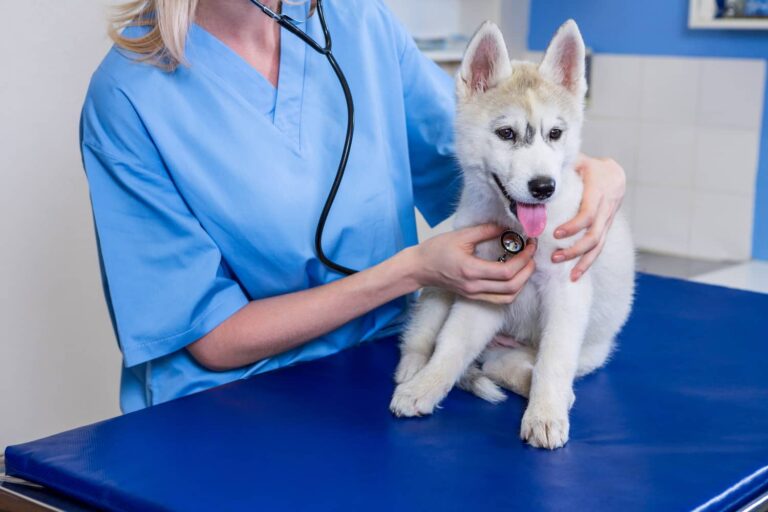
As a dog owner, it can be alarming when your furry companion starts coughing. The sound is distressing, and it's hard not to worry about what might be causing it. While coughing in dogs can be benign and temporary, it can sometimes be a sign of serious health issues. In this blog post, we will explore the top 7 causes of coughing in dogs. By the end of this post, you'll be equipped with the knowledge to better understand your pet's health and when to seek professional veterinary help.
Heart disease is a serious condition that can often lead to coughing in dogs. When a dog's heart doesn't pump blood effectively, fluid may accumulate in or around the lungs, leading to coughing and this is called pulmonary edema. Additionally, enlargement of a dog's left heart can compress its left mainstem bronchus or trachea, which then stimulates the cough receptors, thereby resulting in coughing.
Heart disease often presents with other symptoms such as decreased activity, difficulty breathing, increased respiratory rates and a loss of appetite.
Tracheal collapse is a common cause of coughing in dogs, particularly in small breeds. The trachea, or windpipe, can become weakened and collapse, leading to a distinct, honking cough. Many pet owners refer to the cough as a "goose-honking" cough and is usually a dry and non-productive cough. Dogs with tracheal collapse may exhibit neck sensitivity and cough when wearing neck collars.
The specific reason for tracheal collapse is unclear, but it is believed to have multiple contributing factors. While tracheal collapse can never be cured, medical treatment is available to help manage symptoms.
Kennel cough is a highly contagious respiratory disease often implicated in causing coughing in dogs. It can be contracted in places where dogs congregate, like kennels and dog parks. The cough is often dry and hacking and may sound as if the dog is trying to clear its throat.
Symptoms of kennel cough in dogs usually occur 5-7 days after exposure to an infected dog or environment.
In some cases, the cough is mild and self-limiting over a period of a few days and in other dogs, the cough can become more severe and require medical intervention with cough suppressants and antibiotics.
Canine bronchitis, both acute and chronic, can cause coughing in dogs. Inflammation of the bronchi leads to increased mucus production and sensitivity in the airways, both of which contribute to coughing. Chronic bronchitis often presents with a persistent, productive cough and can lead to more severe health issues if not treated promptly.
It is not uncommon for certain dogs to experience exercise intolerance or respiratory distress due to bronchitis. Typically, any systemic symptoms such as severe lethargy, loss of appetite, and fever are absent unless there is an additional complicating factor like pneumonia.
Pneumonia, an infection in the lungs, is another cause of coughing in dogs. It is usually accompanied by other symptoms such as fever, difficulty breathing, and lethargy. Pneumonia in dogs can be caused by bacteria, viruses, or inhalation of foreign substances, and it can lead to serious health complications and can be fatal if not treated immediately and aggressively.
A deep cough, abnormal breathing patterns, and a subdued demeanor are usually present in dogs suffering from pneumonia.
Laryngeal paralysis occurs when the muscles that control the movement of the arytenoid cartilages in the larynx do not function properly. This can cause breathing difficulties and coughing in dogs. This condition is more common in older, large-breed dogs such as Labrador Retrievers and can cause a change in bark, loud breathing, and coughing.
Neoplasia, or cancer, is a less common but serious cause of coughing in dogs. Cancer can affect the lungs or airways, leading to persistent coughing. If a dog has a chronic, unexplained cough, a veterinarian may conduct further tests to rule out cancer within the chest such as lung cancer. Chest X-rays are very helpful in diagnosing chest/lung cancer in dogs.
Your dog's dry cough followed by gagging could be indicative of several conditions, two of the most common being kennel cough and tracheal collapse. If your dog is older and a large breed, laryngeal paralysis is another common cause of a dry cough followed by gagging.
Tracheal collapse is a disease frequently misinterpreted as kennel cough.
A wet or productive cough in dogs could be a sign of conditions like bronchitis, pneumonia, or pulmonary edema (heart disease) where there's an increased production of fluid and mucus in the airways or lungs. It's important to consult your veterinarian if your dog develops a persistent wet cough.
Coughing in dogs can be caused by a range of conditions, including heart disease, tracheal collapse, kennel cough, bronchitis, pneumonia, laryngeal paralysis, and cancer. Symptoms may include decreased activity or difficulty breathing as well as increased respiratory rates and loss of appetite. It is important to seek veterinary help if your dog exhibits any signs of coughing so that the underlying cause can be identified and treated accordingly. With prompt diagnosis and treatment for these common causes of coughing in dogs, pet owners have an opportunity to ensure their furry friends remain healthy and happy.


