Hospital Hours: Monday-Friday: 8am-6pm | Saturday: 8am-4pm
(519) 896-0532

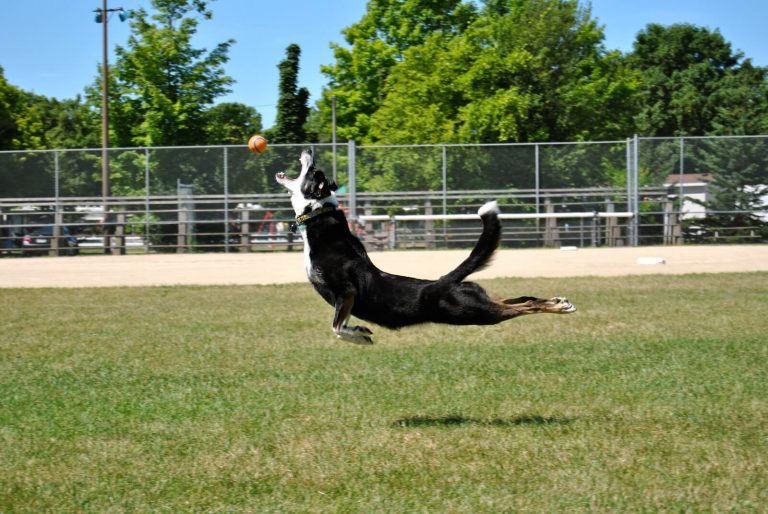
An iliopsoas injury is a strain or tear of the muscle that swings a dog's hind leg forward. It usually shows up as lameness in a back leg after a slip, a jump or hard play. Most dogs recover with rest and rehabilitation, though it can take weeks to months.1 Other hip, knee and spine problems cause the same limp, so I recommend starting with an exam.
Key Takeaways
Call us today if your dog suddenly can't use a back leg, drags or knuckles a paw, cries out in pain, or loses control of its bladder or bowels. Those signs can mean a spinal problem rather than a muscle strain, and that can't wait. Call us at (519) 896-0532, or use our emergency page after hours.

The iliopsoas is two muscles fused together, the psoas major and the iliacus. The psoas major starts on the lumbar vertebrae in the lower back and the iliacus on the pelvis. Together they attach to the lesser trochanter, a bony bump on the inside of the femur (thigh bone).3
Its main job is hip flexion, which swings the leg forward. The muscle also helps steady the hip joint and the lower spine.3
Most sudden strains happen when the muscle is stretched while it's working hard. A slip, a missed jump or a quick change of direction does exactly that.1 Dogs that aren't athletes can strain it as well. A slip into a splay-legged position or a long, hard hike is enough,3 and so is a day of intense play for a dog that's normally quiet.
Chronic injuries are thought to build up from repeated small injuries to the muscle, often after a change in the way the dog moves puts extra load on it.1 An untreated strain can also turn chronic.1
In a survey of 4,197 agility dogs, the factors linked to a higher risk included:1
Iliopsoas strains turn up in dogs with another orthopedic problem, such as a ruptured cruciate ligament.3 We also see them in dogs recovering from surgery for one.
Iliopsoas injury is the second most common injury in agility dogs, after the shoulder. In a survey covering 4,701 agility dogs, 41.7% had an injury that kept them out of agility for more than a week. Shoulder injuries made up 30.1% of those injuries and iliopsoas injuries 19.4%.2 A follow-up analysis of the same survey found that 327 of 4,197 dogs (7.8%) had a history of an iliopsoas injury.1
Dogs outside sport get it too. In a study cited in that analysis, iliopsoas was the most common diagnosis in dogs seen by an orthopedic service for a hind limb muscle injury.1 Mild strains often ease on their own, so many are probably never diagnosed.3
The most common sign is lameness in a hind leg.1 After a sudden injury it usually starts right after a slip, a jump or hard exercise. In a chronic injury, the limp tends to come and go or slowly worsen.3 A sudden limp in a back leg has many other causes, which is why the exam matters.
Other signs to watch for:
If your dog is limping on a back leg, have a vet examine it. A mild strain can ease on its own, but one left untreated can become chronic.1
Diagnosis starts with the physical exam. We press on the spot where the iliopsoas tendon attaches inside the thigh bone, and a dog with this injury flinches. We also extend the hip backward while turning it inward, which is painful when the iliopsoas is injured.1,3 The muscles of the lower back may be sore as well.3
To confirm the diagnosis, we often use ultrasound to scan the muscle and its tendon. A scan can grade a strain from mild (grade I) to severe (grade III) and can show scarring from older injuries.3 CT and MRI are available, but they're not often needed because the exam and ultrasound usually give the answer. MRI helps when the lower back is also a suspect.3
Ultrasound measurements of the tendon vary between examiners. In a 2026 study, one examiner repeating the measurements got consistent results, but different examiners did not agree with each other. The authors call for standard methods.4
Dogs often have more than one problem. In 72 agility dogs with an ultrasound-confirmed strain seen at a sports medicine referral practice, only 19 (26%) had no other source of pain. Cruciate ligament instability was the most common companion (20 dogs, 28%), followed by lumbosacral pain (17 dogs, 24%) and hip problems (6 dogs, 8%).3 A dog with iliopsoas pain needs an exam of the whole hind end.
Several conditions cause hind leg lameness that looks like an iliopsoas injury, and some occur alongside it:3
| Condition | What you may see | How we tell it apart |
|---|---|---|
| Ruptured cruciate ligament | Lameness in a hind leg, sometimes with a swollen knee | Knee instability on exam (drawer and tibial thrust tests) |
| Hip dysplasia | Stiffness or limping, often worse after exercise | A loose hip joint on exam and changes on hip X-rays |
| Osteoarthritis | Stiffness that builds slowly, worse after rest | Joint changes on X-rays |
| Intervertebral disc disease (IVDD) and lumbosacral disease | Back pain, weak or wobbly hind legs, a paw that drags | Neurologic exam, pain at the lumbosacral junction, then MRI or CT |
A cruciate injury was the most common companion in that series, and our cruciate repair page explains how we treat it.
Treatment starts with rest, pain control and a rehabilitation plan, and most dogs recover without surgery. Nearly all owners in the agility survey used rest, and many also used home exercises, formal rehabilitation or medication.1
Rarely. It has been used in dogs with repeated or long-term injuries, and the procedures, tenotomy and tenomyectomy, cut or remove part of the iliopsoas tendon.
Rehabilitation starts once the acute phase has passed and the pain is under control. In one series of 10 dogs, the plan was at least two sessions a week, with a further period of rehabilitation after the limp resolved to build strength and limit repeat injury.5 A plan can include:
Once your vet says the acute phase is over, a home stretching routine is usually hip extension held for 30 to 60 seconds, 2 to 5 repetitions, three times a day. Ask us to show you the technique first, because stretching an injured muscle the wrong way can set it back.
In the agility survey, 56% of dogs were back in competition within 3 months, 24% took 3 to 6 months, 14% took longer than 6 months, and 6% retired.1
The limp itself can clear much sooner. In the 10-dog rehabilitation series, lameness resolved after a median of 18 days, and the full program, including follow-up sessions, lasted a median of 91 days.5 Eight of the 10 dogs had mild lameness at the first visit. Ten dogs is a small group, and seven were Border Collies.
The injury can come back. Among the dogs in the survey that had a strain, 36% had had more than one, and a muscle that has been injured is more prone to injury again.1
Prevention hasn't been tested directly, but the survey points to a few things you can control.1
Jump height, the age a dog started jump training, the number of competition days and the number of runs per day were not linked to injury.
Warm-ups, conditioning and core strength are widely recommended, and the rehabilitation series advised a longer warm-up when dogs returned to sport.5 None of the studies above tested whether they prevent iliopsoas injuries. After an injury, a gradual return to activity with a rehabilitation support period is how that series tried to limit repeat injuries.5
I'd rather see a back-leg limp early, even one that eases, than after it has turned into a long-standing injury. We're at (519) 896-0532.
It varies from dog to dog. In a survey of agility dogs, 56% were back in competition within 3 months, 24% took 3 to 6 months, and 14% took longer than 6 months. In a small series of 10 dogs treated with rehabilitation, most of them only mildly lame at the first visit, the limp resolved after a median of 18 days, and the full program lasted a median of 91 days.
Most dogs can, usually with a limp or a shorter stride on the sore side. Some also stop wanting to jump or are stiff after resting. A dog that won't put any weight on a back leg, or can't use it at all, should be seen today.
Yes. Dogs flinch when the muscle's attachment on the inside of the thigh is pressed, or when the hip is extended backward and turned inward. Your vet can prescribe pain relief, and rest is part of the treatment.
Mild strains can ease with rest, which is one reason many are probably never diagnosed. A strain that isn't treated can become chronic, and a muscle that has been injured is more likely to be hurt again. A limp that lasts or keeps coming back should be examined.
Yes. In the agility survey, 36% of the dogs that had a strain had had more than one. A gradual return to activity after rehabilitation is how one rehabilitation series tried to limit repeat injury.
Not necessarily, but the two can occur together. In a sports medicine referral practice, 28% of 72 agility dogs with an ultrasound-confirmed iliopsoas strain also had cruciate ligament instability, and only 26% had no other source of pain. That is why the whole hind end is examined.
Only what your vet prescribes. Vets commonly use anti-inflammatory drugs, and sometimes a muscle relaxant for painful spasms. Human pain relievers and anti-inflammatories can be harmful to dogs.
Surgery is uncommon. It has been used in dogs with repeated or long-term injuries, and it involves cutting or removing part of the iliopsoas tendon. Most dogs are treated with rest, medication and rehabilitation.
Sources


