Hospital Hours: Monday-Friday: 8am-6pm | Saturday: 8am-4pm
(519) 896-0532

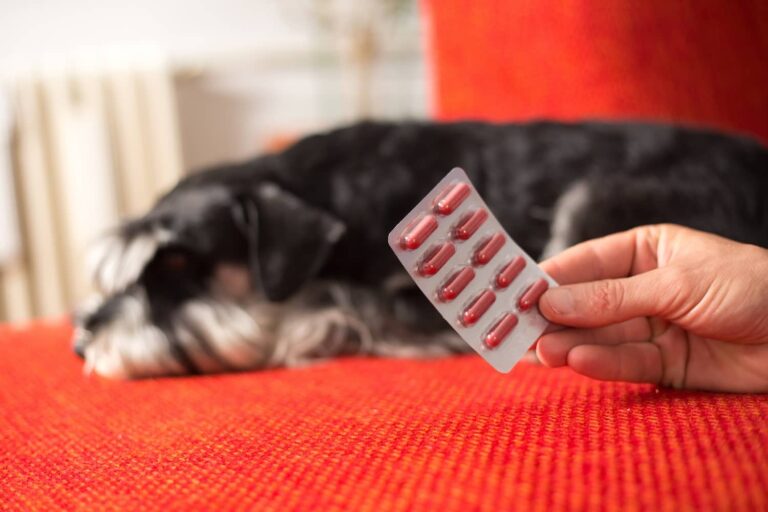
Methocarbamol is the muscle relaxant I reach for when a dog's back or neck has seized up. It doesn't treat the injury underneath. It relaxes the muscle spasm that comes with it, so the dog can rest and the painkillers can do their job.
Key Takeaways
If your dog swallowed Robaxacet, Robaxin Platinum, or any muscle relaxant combined with acetaminophen, call us now. Don't wait for symptoms. Acetaminophen can damage the liver in dogs, and the antidote works best early.4 (519) 896-0532, or our emergency page after hours.
Methocarbamol is a centrally acting skeletal muscle relaxant. Robaxin-V is the veterinary brand, and it's approved for dogs and cats.1 The human version, plain Robaxin, is the same drug.
We don't fully know how it works. The Merck Veterinary Manual says the exact mechanism is unknown, and that methocarbamol has no direct relaxant effect on striated muscle, on nerve fibres, or on the motor endplate where nerve meets muscle.2
What it does is depress the central nervous system. The muscle relaxation follows from that. It's chemically related to guaifenesin, the expectorant.2
You'll see other sites say it "blocks nerve signals in the spinal cord." That's a guess presented as a fact. There is no evidence of any direct effect on nerve fibres.
The timing matters more than the mechanism. Dogs absorb it quickly, with peak blood levels around 2 hours. The elimination half-life is 1.7 hours, so it's cleared fast.3 A drug that short-lived doesn't hold a dog through the day on twice-daily dosing, which is why I usually go every 8 hours.
The approved label covers acute inflammatory and traumatic conditions of skeletal muscle, and reducing muscle spasm.1 In practice that means:
For chocolate toxicity, methocarbamol helps control the tremors, but it's one piece of a larger treatment that starts with decontamination and activated charcoal. Chocolate ingestion is an emergency call, not a reason to open the pill cupboard.
Methocarbamol isn't an anti-inflammatory and it isn't a painkiller. It won't shrink a disc or heal a strain. It's almost always given alongside something else, usually an NSAID like carprofen.

The approved schedule is 60 mg per pound of body weight on the first day, then 30 to 60 mg per pound each day after. The daily total is split into two doses 12 hours apart, or three doses 8 hours apart.1
Read that as per pound. It's the most common mistake I see repeated online. Sixty milligrams per pound is about 132 mg/kg, and the Merck Veterinary Manual gives the same range in metric: 66 to 132 mg/kg per day, divided two or three times daily.2
| Dog's weight | Day 1 loading doseper dose | Day 2 onwardper dose |
|---|---|---|
| 10 lb (4.5 kg) | 200 mg | 100 to 200 mg |
| 20 lb (9 kg) | 400 mg | 200 to 400 mg |
| 30 lb (14 kg) | 600 mg | 300 to 600 mg |
| 40 lb (18 kg) | 800 mg | 400 to 800 mg |
| 50 lb (23 kg) | 1,000 mg | 500 to 1,000 mg |
| 60 lb (27 kg) | 1,200 mg | 600 to 1,200 mg |
| 80 lb (36 kg) | 1,600 mg | 800 to 1,600 mg |
| 100 lb (45 kg) | 2,000 mg | 1,000 to 2,000 mg |
Those first-day numbers look high, and they are. That's the loading dose on the approved label, and it matches the label's own examples: a 25 lb dog gets one 500 mg tablet three times a day, a 50 lb dog gets two.1 Most dogs drop to the lower half of the maintenance range after that.
That maintenance range is wide on purpose. For a back pain dog who mainly needs the spasm taken off, I work in the lower half of it rather than at the loading dose. A dog recovering from real muscle trauma sits higher.
Robaxin-V tablets are 500 mg and scored, so the real dose gets rounded to something a tablet can deliver.1 That rounding is our job. Don't recalculate at home, and don't split a dose across two tablet strengths on your own.
Give it with or without food. The tablets can be crushed. If you miss a dose, give it when you remember unless the next one is close, and never double up.
If there's no response within five days, the label says the diagnosis should be looked at again.1 In the original clinical trials, treatment generally ran 14 to 21 days, not months.1 If your dog still needs a muscle relaxant after three weeks, the question isn't the dose. It's what's actually causing the spasm.
Most dogs tolerate methocarbamol well at normal doses. The usual complaint is sedation, and a dog who's a bit floppy or slow. Drooling is common too.
The signs of too much are lethargy, weakness, wobbliness, and vomiting.3 They are the same effects as normal, just stronger, which is what makes overdose easy to miss at home. The question I ask is whether the dog can still stand and walk in a straight line. A sleepy dog who gets up when you call is fine. A dog who can't hold his back end up is not.
Large overdoses cause deeper CNS depression and, eventually, respiratory depression.3 Treatment is supportive, with decontamination if the ingestion was recent.3
The manufacturer's toxicity studies had dogs tolerating 400 mg/kg per day, split into two doses, five days a week for 26 weeks.1 There's real room between a therapeutic dose and a dangerous one. That's not permission to improvise.
Stop the drug and call us if your dog can't stand, seems disoriented, is breathing oddly, or is vomiting repeatedly.
Robaxin is methocarbamol alone. Robaxacet is methocarbamol plus acetaminophen. The boxes sit next to each other and the names differ by three letters, which makes this an easy mistake at a pharmacy counter and the one that worries me most.
Acetaminophen is the problem. In dogs the liver takes the damage, and red blood cell injury follows at higher doses. Signs of methemoglobinemia have been reported in dogs above 200 mg/kg, and toxicity can happen at lower doses with repeated exposure.4 A regular strength Robaxacet caplet holds 325 mg of acetaminophen, and the extra strength version holds 500 mg,9 so a small dog on a few tablets gets there quickly.
If your vet asks you to pick up methocarbamol at a human pharmacy, read the box before you leave. You want methocarbamol and nothing else. The same goes for any human medication you're tempted to share, ibuprofen included.
Tell us everything your dog is on. The interactions worth naming:

If your dog is on methocarbamol and moving better, keep going and finish the course. Most dogs need it for days to a couple of weeks, not indefinitely.
If it isn't helping after five days, don't raise the dose on your own. That's the point where the label says to reconsider the diagnosis,1 and I'd agree. Muscle spasm is a symptom. If it isn't settling, something is still driving it, and a dog with back pain that won't improve needs imaging rather than a bigger pill.
Stop the next dose and call us if your dog is unusually flat, wobbly, or can't stand.
Before your appointment, note when the pain started, what your dog was doing at the time, and which movements make it worse. Getting up? Stairs? Being picked up? That's more useful to me than anything I'll see in an exam room, because a dog in pain at home is often a different dog on my table. You can book online or call (519) 896-0532.
The approved label is 60 mg per pound of body weight on the first day, then 30 to 60 mg per pound each day after, split into two or three doses. Note that this is per pound, not per kilogram. In metric that works out to 66 to 132 mg/kg per day. Most dogs settle into the lower half of that maintenance range after the first day. Your vet picks the number and rounds it to what a 500 mg scored tablet can actually deliver, so don't recalculate at home.
Blood levels peak around 2 hours after an oral dose, so most owners notice their dog loosening up within a few hours. The half-life is only 1.7 hours, which is why it's usually given every 8 hours rather than twice a day.
Usually days to a couple of weeks. In the original clinical trials treatment generally didn't run past 14 to 21 days. The label also says that if there is no improvement within five days, the diagnosis should be reconsidered. A dog who still needs a muscle relaxant after three weeks needs a new workup, not a higher dose.
Sedation is the common one, along with drooling and a dog who seems a bit floppy. Too much causes lethargy, weakness, wobbliness and vomiting. The useful test at home is whether your dog can still stand and walk a straight line. A sleepy dog who gets up when called is fine. A dog who can't hold his back end up is not, and that's a call to your vet.
Yes, and it's a common pairing. Gabapentin handles nerve pain, methocarbamol handles muscle spasm, so they do different jobs. Both are sedating, so expect a sleepier dog for the first few days and tell your vet about everything else your dog is taking.
No. Robaxacet is methocarbamol combined with acetaminophen, and acetaminophen damages a dog's liver. Regular strength holds 325 mg per caplet and extra strength holds 500 mg. If your vet sends you to a human pharmacy for methocarbamol, read the box and make sure it contains methocarbamol only. If your dog has already swallowed Robaxacet, call your vet right away rather than waiting for symptoms.
No. It relaxes muscle spasm, which takes away one source of pain, but it has no anti-inflammatory or analgesic action of its own. It's almost always prescribed alongside something else, usually an anti-inflammatory, plus a period of rest.
It helps control the muscle tremors that come with a bad chocolate case, but it's one part of a hospital treatment that starts with decontamination and activated charcoal. Chocolate ingestion is an emergency phone call, not something to manage at home with tablets.
Sources


