Hospital Hours: Monday-Friday: 8am-6pm | Saturday: 8am-4pm
(519) 896-0532

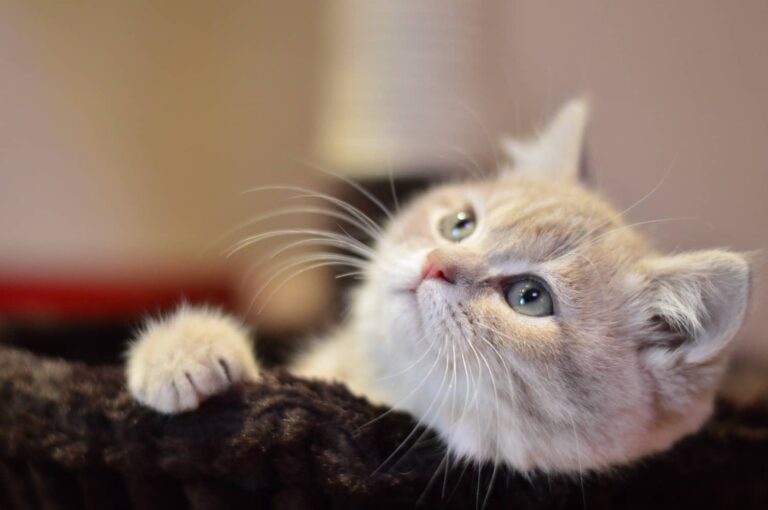
Chlorambucil is a low dose chemotherapy tablet we use in cats. Most of the time that means small cell intestinal lymphoma, or inflammatory bowel disease that hasn't settled on steroids alone. You give it at home. Most cats tolerate it well, and cats treated for small cell lymphoma often live years rather than months.
Key Takeaways
Call us before the next dose if your cat goes off food for more than a day, seems unusually tired or weak, runs a fever, bruises or bleeds from the gums or nose, or develops twitching or tremors. Any of those can mean the blood counts have dropped or the dose needs to change.
Chlorambucil, sold as Leukeran, is an alkylating chemotherapy drug. It damages the DNA of dividing cells so they can't keep replicating.1 In cats we give it as a low, steady dose rather than the big infusions people picture when they hear chemotherapy.
It belongs to the nitrogen mustard family, and it's the slow one of that group.1 That's a feature, not a limitation. Acting gradually is what makes it suit the chronic, slow growing conditions we treat in cats. It's also gentler on a cat whose marrow is already under pressure.
Chlorambucil also damps down the immune system. That's the same mechanism on a different target. Immune cells divide quickly, so a drug that interferes with DNA replication slows them too. It's why the drug covers both cancer and immune driven disease, and why autoimmune conditions in cats sometimes end up on it.
One thing surprises almost every owner: no chlorambucil product is approved for animals anywhere. Every prescription I write for a cat is extra label use of a human medication. That's normal and legal in veterinary practice. It does mean the pamphlet in the box is written for people with leukemia and won't mention cats.
Small cell intestinal lymphoma is the reason most cats end up on chlorambucil. It's a slow growing lymphoma of the intestinal wall, and the most common gut cancer we see in older cats. It also responds to this drug better than almost anything else we treat.
If that's the diagnosis you've just been given, our guide to intestinal lymphoma in cats covers how it's diagnosed and what the disease itself does. This page is about the drug.
| Condition | Where chlorambucil fits |
|---|---|
| Small cell intestinal lymphoma | First line treatment, paired with prednisolone. The main use.3,4 |
| Chronic lymphocytic leukemia | First line. Slow growing leukemia of the lymphocytes.1 |
| Refractory inflammatory bowel disease | Added when diet change and steroids haven't controlled it.6 |
| Pemphigus foliaceus | Second line, when prednisolone or cyclosporine haven't worked or can't be used. |
| Severe eosinophilic granuloma complex | Reserved for stubborn cases. See our guide to feline miliary dermatitis for related skin disease. |
IBD and small cell lymphoma come with a practical wrinkle. The two look nearly identical on biopsy, cause the same weight loss and vomiting, and get treated with the same two drugs. If your cat's diagnosis came back as one and the treatment plan looks like the other, that's usually why.
For small cell intestinal lymphoma, most cats respond, and many live for years. Two studies are worth knowing about.
A series of 56 cats on chlorambucil and a steroid reported an 85.7% response rate. Median progression free survival was 1078 days, and median overall survival 1317 days.3 An earlier group of 28 cats reported a 96% response rate, with remission lasting a median of 786 days.4
Roughly speaking, three to four cats in every four respond. The ones who do often get two to three good years.
Those are medians from referral populations, so individual cats land on both sides of them. The point is that this is a treatable disease rather than a terminal one. That isn't true of most cancers we diagnose in cats.

The other benefit is how the treatment fits into your life. It's a tablet, given at home, every second or third day. No infusion. No day of hospitalisation, and no run of clinic visits built around a drip. For a cat who finds the car ride harder than the illness, that matters.
Response usually shows up as appetite returning and weight stabilising, over weeks rather than days. If your cat is still not eating well, our guide on how to stimulate appetite in cats has things to try while the drug catches up.
The standard dose is one 2 mg tablet every 48 to 72 hours, given with prednisolone at 5 mg once daily.3 In the 56 cat series, 57% were on a tablet every other day, 24% on Monday, Wednesday and Friday, and 16% every 72 hours.3
Notice the tablet is 2 mg in all three of those. In Canada that's the only strength there is,5 and it can't be split. So a smaller cat doesn't get a smaller piece. They get the same tablet less often.
If you need a dose that doesn't divide into 2 mg, it has to come from a compounding pharmacy as a capsule or liquid.
| Protocol | Dose | How often | When we use it |
|---|---|---|---|
| Continuous | One 2 mg tablet | Every 48 to 72 hours3 | The usual approach for small cell lymphoma and IBD |
| Pulse | 20 mg/m² | Every 2 weeks2 | When dosing every other day isn't workable at home |
| Prednisolone alongside | 5 mg | Once daily3 | Standard partner for both protocols |
Prednisolone isn't optional here. Every response rate on this page comes from cats on both drugs, and the steroid does real work of its own against lymphoma. If you're weighing whether to keep giving it, bring it to us rather than treating it as a corner to cut.
Keep the tablets in the fridge between 2°C and 8°C.5 That surprises people, and it's the one storage instruction that actually changes if you get it wrong.
Bloodwork is how we catch a falling blood cell count before it becomes an infection or a bleed. Bone marrow suppression is the main risk of this drug, and there's no version of it you can see at home until it's already advanced.
In the 56 cat series, a third of cats had some adverse event. Myelosuppression accounted for 44% of those, and 10.7% developed severe liver enzyme elevations.3
Merck also flags thrombocytopenia as cumulative with this drug.1 The platelet count can drift down over months on a dose your cat handled fine at the start. A cat who has been stable for a year is not a cat who has stopped needing monitoring.

We run a CBC before the first tablet. Another a couple of weeks in, then every two to three weeks while we settle on a dose. Once the counts hold steady for a few months, we stretch that to every two to three months for as long as your cat stays on treatment.
Liver values go on the same schedule, given how often they move.3
We check urine too, for a specific reason. Four cats on chlorambucil have been reported with acquired Fanconi syndrome, a kidney tubule problem.6 It showed up as sugar in the urine with a normal blood glucose, found by chance on routine screening.
They'd been on the drug between 2 and 27 months. Three of the four improved or fully recovered within three months of stopping.6 It's rare, but it's only ever found by looking.
Most cats have no visible side effects at all, which is the main reason we reach for this drug rather than a harsher one. The problems it does cause are mostly found on bloodwork rather than noticed at home.
| Effect | How common | What you would notice |
|---|---|---|
| Bone marrow suppression | The main one. 44% of adverse events in one series, mostly mild3 | Usually nothing. Sometimes tiredness, fever, or easy bruising and bleeding |
| Raised liver enzymes | Severe elevations in 10.7% of cats in the same series3 | Usually nothing. Occasionally appetite loss or yellow gums |
| Stomach upset | Uncommon at continuous dosing, more likely on pulse dosing2 | Vomiting, soft stool, or going off food |
| Twitching, tremors, myoclonus | Very rare, and linked to higher pulse doses5,7 | Muscle jerks of the head or limbs, agitation, sensitivity to noise |
| Fanconi syndrome | Rare. Four reported cats6 | Nothing. Found on a urine test |
The neurological signs are uncommon but worth knowing about. A cat treated for lymphoma developed facial twitching and muscle jerks after a dosing error. The signs settled once the drug was stopped and she was given supportive care.7
Health Canada's monograph lists tremor, twitching and myoclonus as very rare effects, and notes a higher seizure risk on high pulse dose regimens.5 If you see twitching, stop the tablets and call us. It's usually reversible.
One longer term possibility is worth knowing about. A small proportion of cats treated for small cell lymphoma later develop the aggressive large cell form.8 That transformation comes from the lymphoma, not from the chlorambucil. It's the reason a cat who was doing well and then drops off suddenly needs to be seen rather than watched.
Yes. Chlorambucil is often described as having no known drug interactions. That's a shortened version of a longer statement, and misleading on its own.
Live vaccines should not be given while your cat is on chlorambucil. The product monograph is direct about it: immunisation with live organism vaccines is not recommended in immunocompromised patients.5 A cat on this drug is immunocompromised by design.
You'll face that decision at your cat's annual visit, so tell whoever is vaccinating that your cat is on chemotherapy. There are killed options, and sometimes the answer is to postpone.
Anything else that suppresses the bone marrow adds to what chlorambucil is already doing. That includes other chemotherapy drugs, azathioprine, and griseofulvin. Stacking them raises the risk of the counts dropping far enough to matter.
Other immunosuppressants carry the same logic from a different angle. Combining chlorambucil with cyclosporine or a high steroid dose raises infection risk. That's manageable when it's deliberate, and a problem when nobody knew about the second drug.
Tell us about everything your cat is taking, including flea and worming products and anything from another clinic. Most combinations are fine. The ones that aren't, we'd rather catch before they're on the counter.
Chlorambucil is cytotoxic, so these precautions are for you rather than your cat. The tablet is coated and safe to give as long as it stays intact, and the risk you're managing is contact with the drug itself.
If your cat vomits a tablet back up, don't give a replacement. Pick it up with gloves, note it, and carry on with the next scheduled dose. Same with a missed dose. Give it when you remember if it's within a few hours. Otherwise skip it and go back to schedule rather than doubling up.
Wash bedding or towels your cat has soiled separately from the rest of the laundry, and run them through twice.
Starting a cat on chemotherapy sounds much worse than it turns out to be. Most of my patients on chlorambucil are eating well, putting weight back on and living an ordinary life at home. A blood test every couple of months is the only real intrusion.
If your cat has just been diagnosed and you're deciding whether to treat, that's a conversation worth having with us properly rather than from a search result.
Usually for life. Chlorambucil controls small cell lymphoma and inflammatory bowel disease rather than curing them, so stopping tends to let the disease come back. In one series of 56 cats treated for small cell lymphoma, median survival was 1317 days, most of that on treatment. Some cats with IBD do get tapered down or off once things have been stable for a long stretch. That's a decision we make together, based on rechecks rather than a fixed endpoint.
Over weeks rather than days. Chlorambucil is slow acting by design. Appetite is usually the first thing to turn around, then weight, then the vomiting or diarrhoea settling. Most owners see a clear difference by four to six weeks. The prednisolone alongside it works faster, so some of what you notice in the first week or two is the steroid. If nothing has changed after six to eight weeks, tell us. The dose or the diagnosis may need another look.
Yes. This is the part I won't skip. Chlorambucil suppresses the bone marrow, and a dropping white cell or platelet count causes no symptoms until it's advanced enough to bring on an infection or a bleed. Platelet suppression is also cumulative, so a cat who has been fine for a year can still drift down on the same dose. We run a CBC before the first tablet, again a couple of weeks in, then every two to three weeks until the dose is settled. After that it's every two to three months. Liver values and urine go on the same schedule.
Not with live vaccines. Chlorambucil suppresses the immune system, and live organism vaccines aren't recommended in an immunocompromised patient. This is the interaction owners are most likely to run into, because vaccine reminders keep arriving whether or not your cat is on chemotherapy. Tell whoever is vaccinating that your cat is on chlorambucil. Depending on age, lifestyle and risk, the answer may be a killed vaccine instead, or postponing until treatment changes. It's a conversation, not an automatic no to everything.
Don't double up, and don't replace a vomited tablet. If you remember a missed dose within a few hours, give it and carry on. If it's been longer than that, skip it and go back to the normal schedule. If your cat brings a tablet back up, pick it up wearing gloves, note the date, and wait for the next scheduled dose. A second tablet risks an overdose, because there's no way to know how much was absorbed before it came back up. Let us know if it happens more than once.
Yes, with sensible handling. Keep the tablets in the fridge in their original child resistant container, out of reach. Wear disposable gloves whenever you handle one, and wash your hands afterwards. Never split or crush it. For three days after each dose there's active drug in your cat's urine and faeces, so wear gloves for the litter box, bag the waste and use a low dust litter. Children, pregnant or breastfeeding women, anyone trying to conceive, and anyone immunocompromised shouldn't handle the drug or clean the litter box at all. Hand that job to someone else.
I wouldn't, and not without talking to us first. Every response and survival figure published for chlorambucil in cats comes from cats on both drugs. The steroid does real work of its own against lymphoma and against intestinal inflammation, which is why the two are prescribed as a pair. Prednisolone also shouldn't be stopped abruptly after a long course. If the steroid is causing a problem, such as a rising blood glucose in a cat heading towards diabetes, raise it with us. There are ways to adjust it.
There are options, so come in rather than assuming the treatment has run out. Sometimes the dose or the interval needs adjusting. Sometimes the small cell lymphoma has transformed into the aggressive large cell form, a recognised event in cats treated for the small cell disease, and that needs a different protocol. In one series, cats who had prednisone and chlorambucil reintroduced did better than those switched to lomustine. A cat who was stable and then drops off suddenly should be seen, not watched.
Sources


